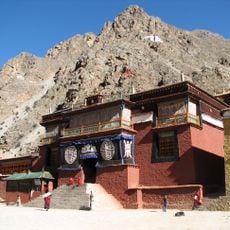
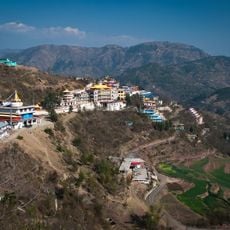
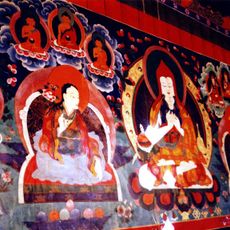
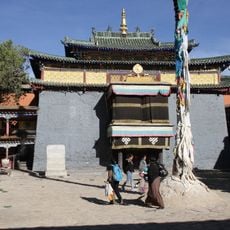
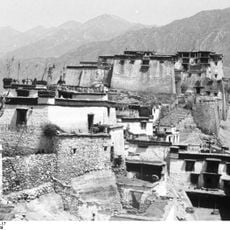
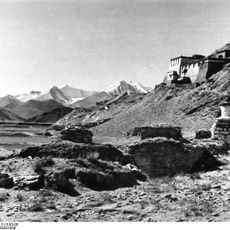
Tsechen Monastery and Dzong, Buddhist fortress and monastery in Tsang region, Tibet
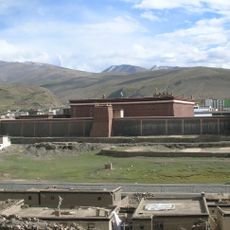
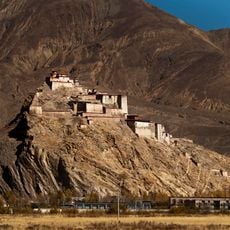
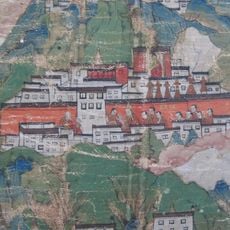
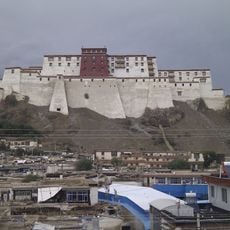
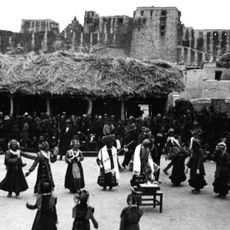
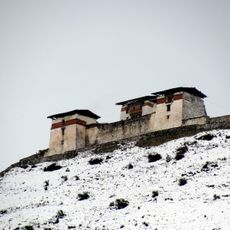
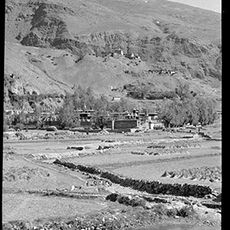
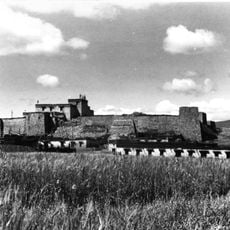
Tsechen Monastery and Dzong, also called Shambu Tsegu, was a fortified Tibetan monastery about 5 km northwest of Gyantse, above the village of Tsechen. Built on a steep hill roughly 180 m high and 1.6 km long, its ramparts were considered nearly as strong as those of Gyantse Dzong. Only some hilltop walls remain today.
The monastery was founded in the 14th century and grew into a center for Buddhist learning with a growing community. It later gained importance for its military role during periods of regional unrest.
The name Tsechen means "great seat," and the monastery was the seat of the kings of Gyantse until the town expanded in the 15th century. Remdawa Zhonu Lodro Zhonu, Tsongkapa's principal teacher, resided here, and Jamyang Konchok Zangpo and Namkha Chokyong, both 14th Throne Holders of Jokhang Monastery, held the monastic seat at Tsechen. It was also the seat of the incarnation of Buton Rinchendrub, known as Kungra Lodro.
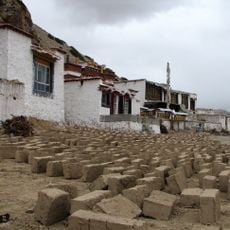
Only ruined walls remain on the hilltop about 5 km northwest of Gyantse, above Tsechen village; there is no monastery to enter and no monks in residence. The climb is steep, and the reward is the wide view over the valley from the old walls. Allow time for the altitude and the rough ground.
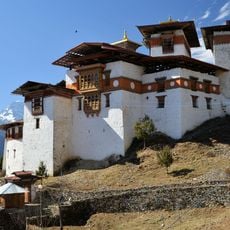
The site displays a rare combination of thick stone walls and religious spaces in tight quarters. This blend of fortress design and monastic function is uncommon in the Tibetan region and shows the complex history of the area.
The community of curious travelers
AroundUs brings together thousands of curated places, local tips, and hidden gems, enriched daily by 93,068 contributors worldwide.