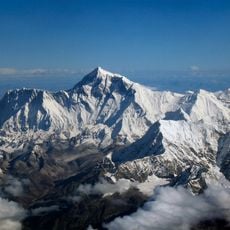
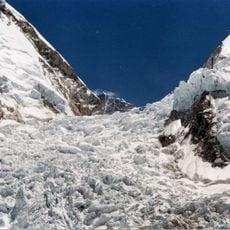
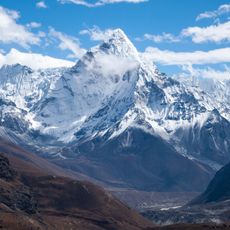
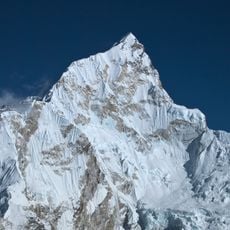
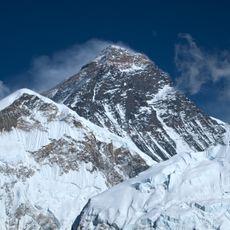
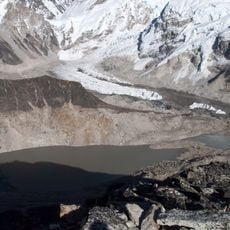
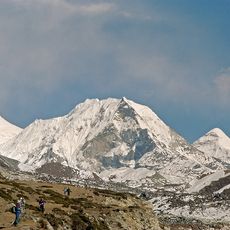
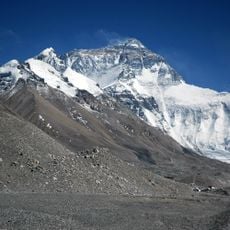
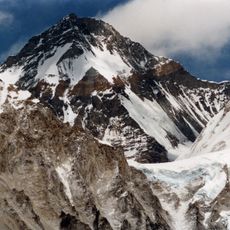
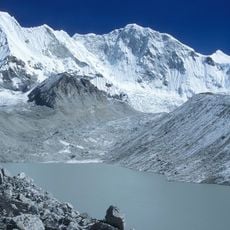
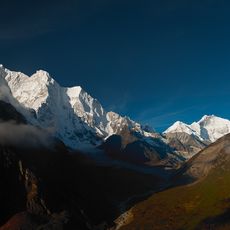
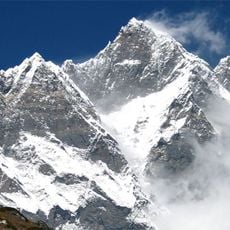
Kangshung Glacier, Himalayan glacier on Mount Everest's eastern face, Tibet Autonomous Region, China
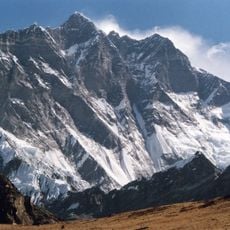
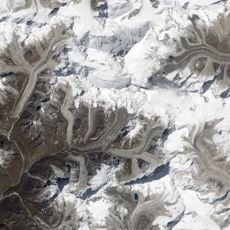
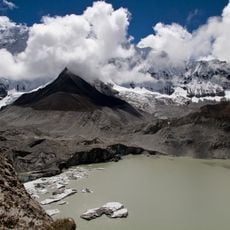
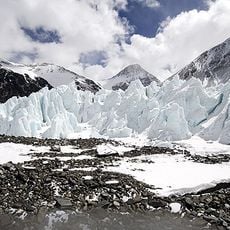
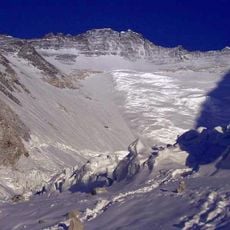
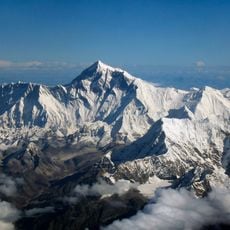
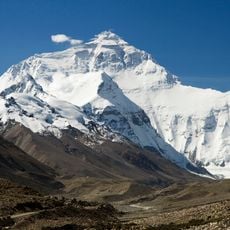
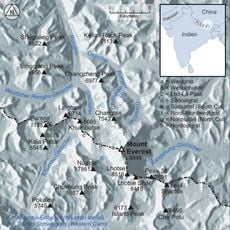
The Kangshung Glacier is one of the three main glaciers of Mount Everest, on the mountain's eastern side in Shigatse, Tibet. Fed by the Kangshung Face shared by Everest and Lhotse, it is about 17 km long, the longest of the three, and flows east through the Kama valley, where its meltwater becomes the Kama Chu.
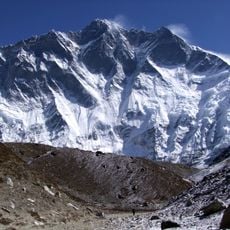
The glacier's existence as one of Everest's three main ice streams, alongside the Khumbu and Rongbuk glaciers, is documented in mountaineering and survey literature; its accumulation zone lies on the shared east face of Everest and Lhotse, the Kangshung Face. Recent decades have seen accelerated melting attributed to global climate change, a process noted across the region's glaciers.
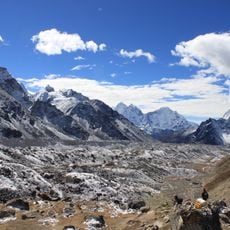
The glacier feeds the Kama Chu, which flows east through the Kama valley; in German sources the outflow is called Karma Chu and empties into the Bum Chu, the upper Arun. Approaching from Kharta means crossing the Shao La or Langma La passes, so the valley is reached on foot over several days.
Access requires a multi-day trek from Kharta with experienced guides, as routes cross high alpine passes. Visitors should prepare for harsh conditions and take altitude acclimatization seriously.
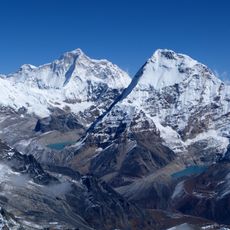
The glacier's meltwater becomes the Kama Chu, which flows east through the Kama valley; German sources name the outflow Karma Chu and place its mouth at the Bum Chu, the upper Arun. The Nepal-China border crosses the summits south and east of the ice, including Makalu and Chomo Lonzo.
The community of curious travelers
AroundUs brings together thousands of curated places, local tips, and hidden gems, enriched daily by 93,658 contributors worldwide.