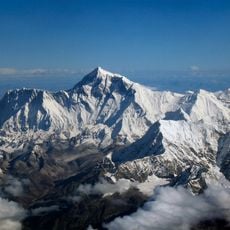
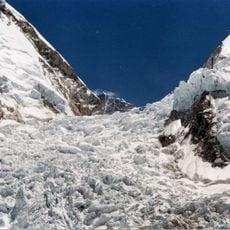
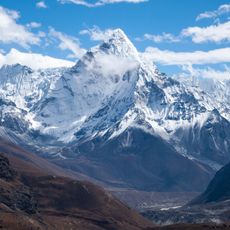
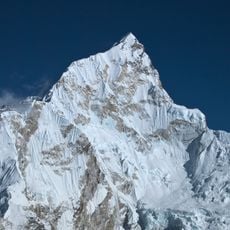
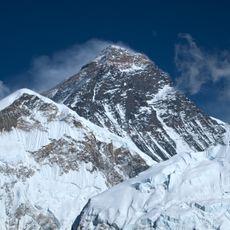
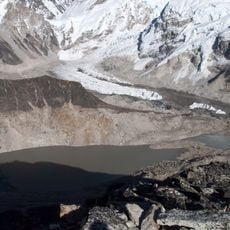
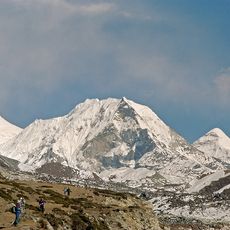
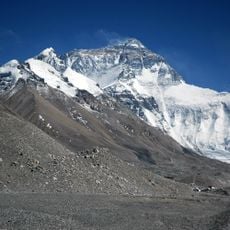
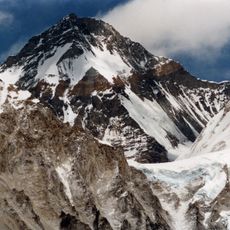
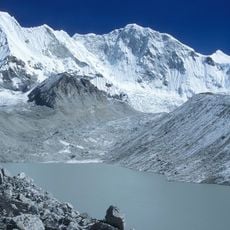
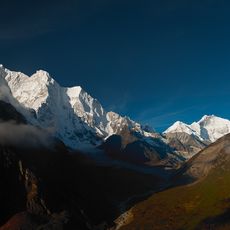
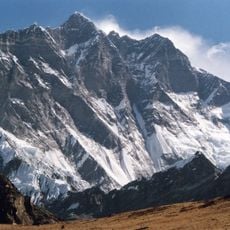
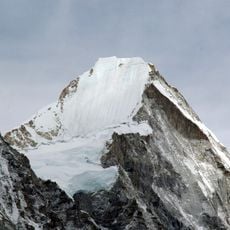
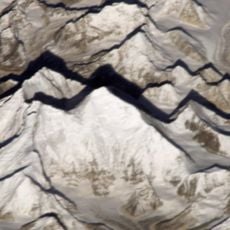
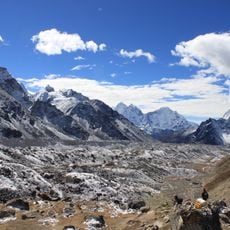
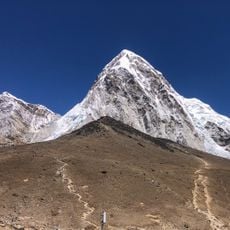
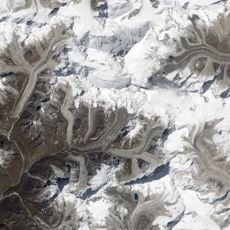
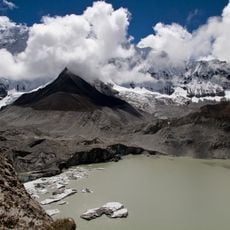
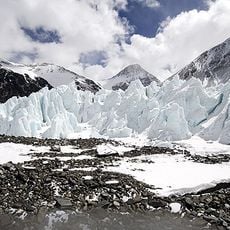
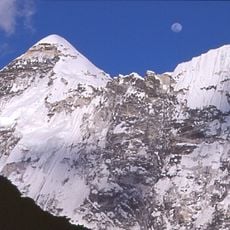
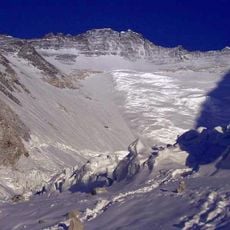
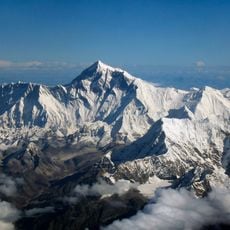
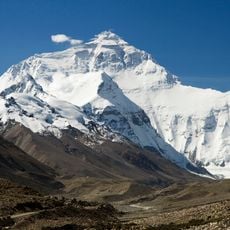
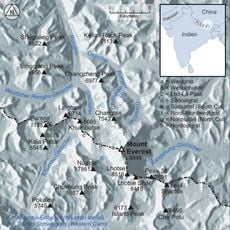
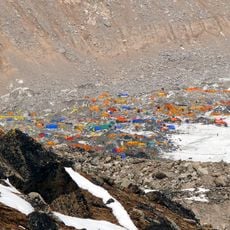
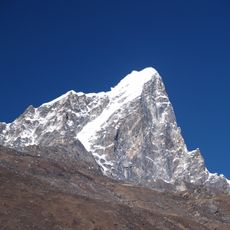
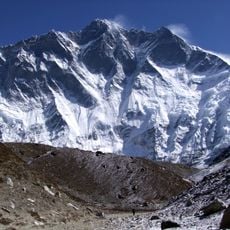
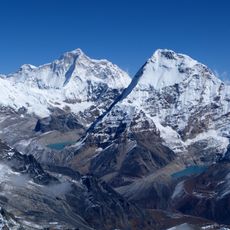
Lhotse Shar, Mountain summit in Solukhumbu, Nepal and Tibet Autonomous Region, China.
Lhotse Shar is a mountain summit at 8,383 meters above sea level, forming the eastern peak of the Lhotse massif within the Mahalangur Himal range. The mountain sits on the border between Nepal and Tibet and features steep flanks with complex climbing approaches.
Austrian mountaineers Sepp Mayerl and Rolf Walter made the first successful ascent in 1970 by climbing the southeastern flank. Since then, it has remained a demanding objective for experienced climbers from around the world.
The Tibetan name combines 'Lhotse', South Peak, with 'Shar', east, marking the summit as the eastern highpoint of Lhotse's central ridge. In 2007 the South Korean climber Um Hong-gil summited Lhotse Shar, completing the first 14+2 challenge. Korean sources count the peak among the 16 eight-thousander summits rather than the classic 14.
Climbers cannot reach the Shar by traversing Lhotse's central ridge; they must climb the mountain's full vertical rise from outside the Western Cwm. Most choose the southeastern flank of the Shar itself or the direct line up Lhotse's South Face. All directions cross exposed rock bands and avalanche-prone slopes, and the summit lies well inside the death zone at 8,383 m.
This mountain has a notably high fatality rate among climbers, making it one of the deadliest eight-thousand-meter peaks. This danger reflects the extreme technical difficulty that climbers often underestimate.
The community of curious travelers
AroundUs brings together thousands of curated places, local tips, and hidden gems, enriched daily by 93,903 contributors worldwide.