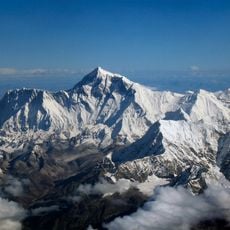
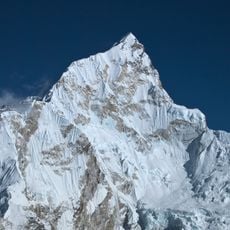
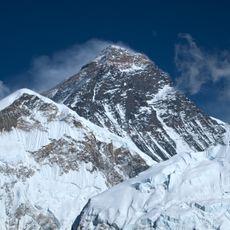
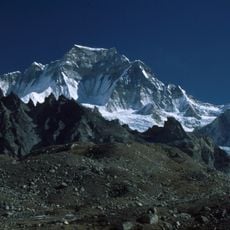
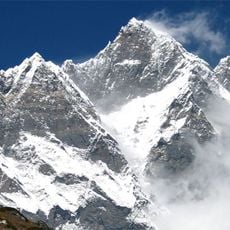
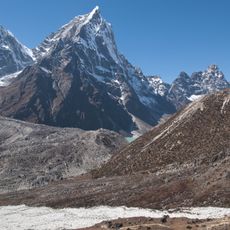
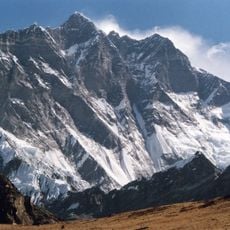
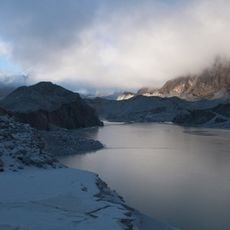
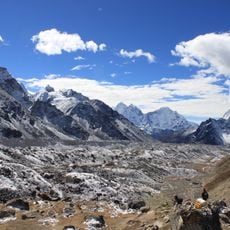
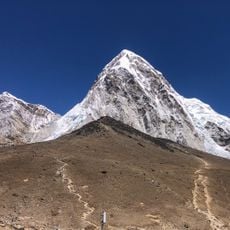
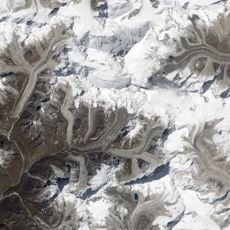
Lingtren, Mountain summit in Tibet Autonomous Region, China and Sagarmatha Zone, Nepal.
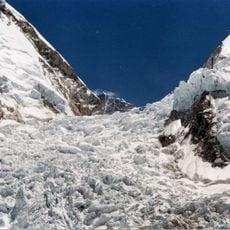
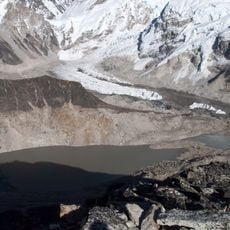
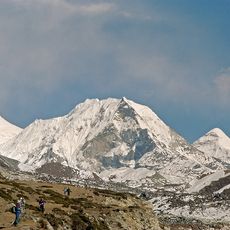
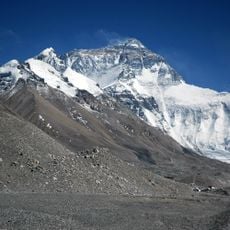
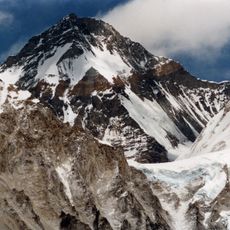
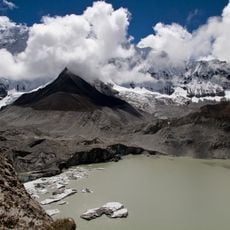
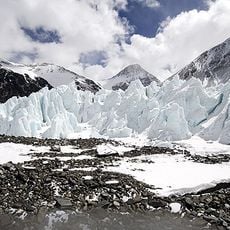
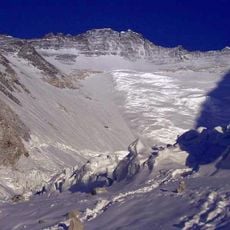
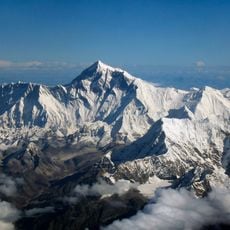
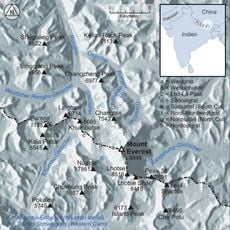
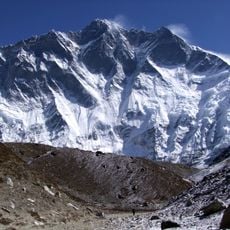
Lingtren is a 6,749-metre summit on the Nepal–Tibet border, about 8 km from Mount Everest. Its south face is black gneiss intruded by thinner granite sills and overlain by a thick sill of massive granite. The ridge runs from Khumbutse over Lingtren to Pumori, and the Khumbu Glacier bends sharply at the mountain's base.
Lingtren was first seen by Western explorers in 1921, when George Mallory and Guy Bullock of the British Everest reconnaissance expedition skirted its flanks to reach a col overlooking the Western Cwm. Eric Shipton and Dan Bryant made the first ascent in 1935, during the same expedition climbing the outlying Lingtrennup; on the descent Bryant broke through a cornice and fell about 150 metres before Shipton held the rope and he climbed back. No ascent since has been fully accepted, and a planned South African expedition was cancelled in 2013.
Mallory and Bullock chose the name Lingtren from Tibetan, meaning "subcontinent" or "island", and the same word is used for a lesser temple attached to a main one. The name once covered the whole formation reaching into the West Rongbuk Glacier; today it applies only to the highest summit above the Khumbu Glacier.
Lingtren lies on the Nepal–Tibet border, so access is arranged separately from each side: from Nepal via the Khumbu valley and Everest Base Camp, from Tibet via the Rongbuk valley. The 1935 ascent approached from the north. No fully accepted ascent has been recorded since 1935, and a planned South African expedition was cancelled in 2013.
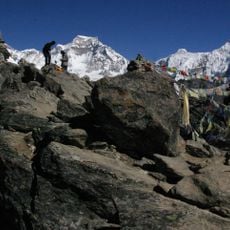
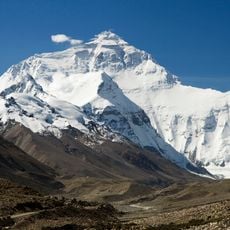
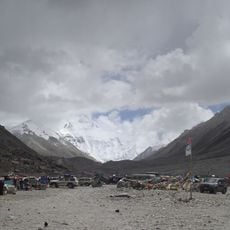
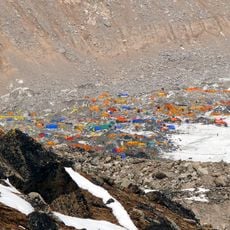
The summit is visible from Mount Everest Base Camp, though documented ascents after 1935 remain extremely rare. This proximity to one of the world's most famous mountains draws trekkers who pass through the region.
The community of curious travelers
AroundUs brings together thousands of curated places, local tips, and hidden gems, enriched daily by 92,775 contributors worldwide.