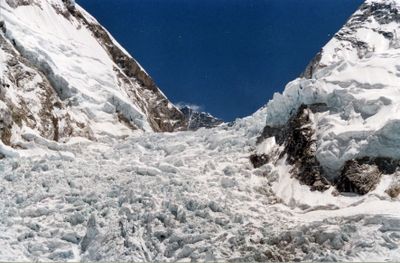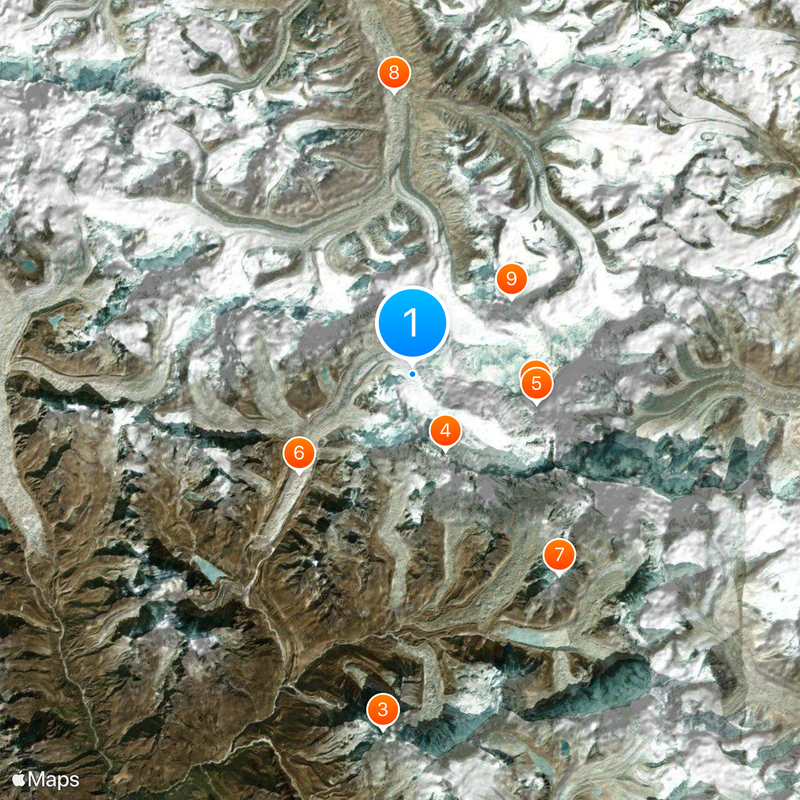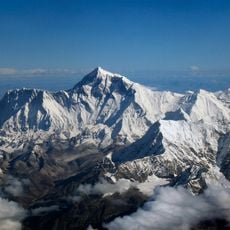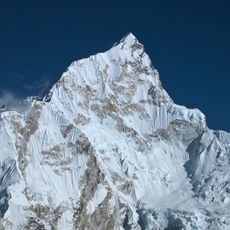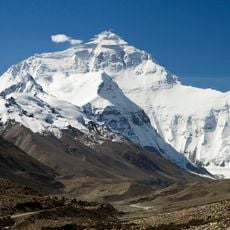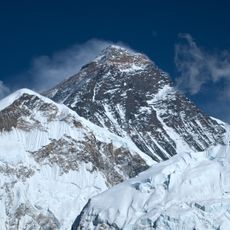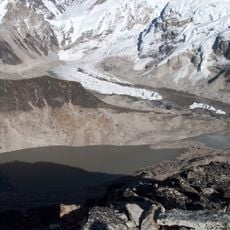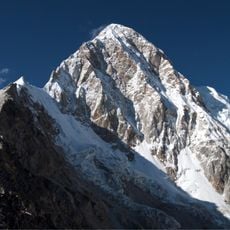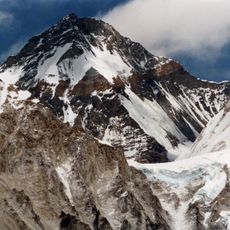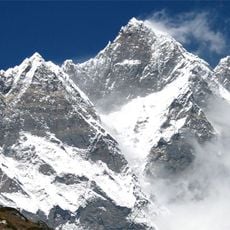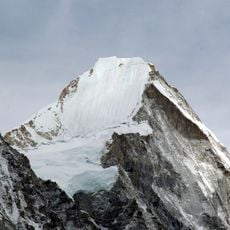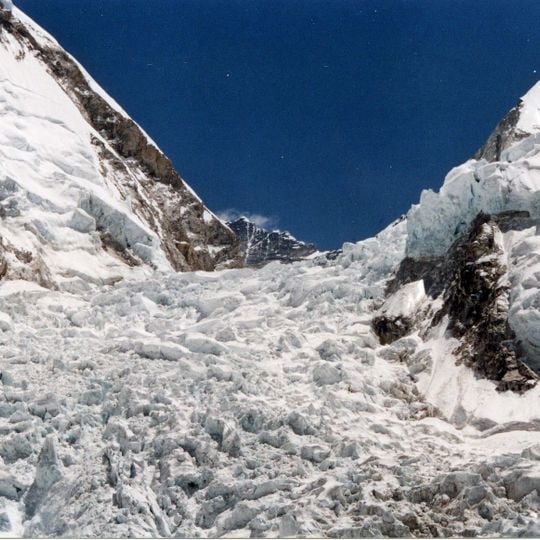
Khumbu Icefall, Glacier formation at Mount Everest South Route, Nepal
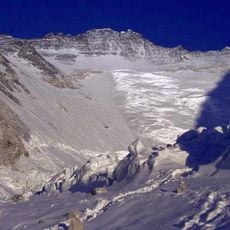
The Khumbu Icefall is a glacier formation on the southern route of Mount Everest in the Himalayan range, where ice tumbles over a steep slope and fractures into chaotic towers and crevasses. The terrain shifts constantly as gravity pulls the frozen mass downward, displacing blocks the size of a house.
Edmund Hillary and Tenzing Norgay crossed the icefall during their successful summit of Everest in May 1953. Over the following decades, this section became one of the most hazardous passages for expeditions.
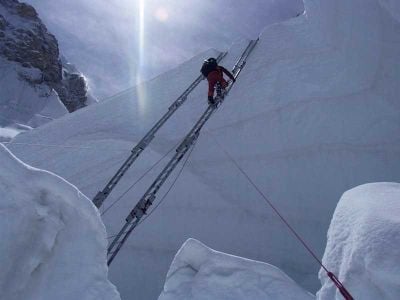
Since 1988, when an American expedition charged others for the route it had fixed, one team each spring has equipped the icefall with ladders and ropes while others pay for the work; Rob Hall's team handled it in 1993–1995, and in 1996 teams paid 2,000 dollars each. Today the Sherpa Icefall Doctors set and maintain the route, and the climbing season is considered open once they finish.
Most climbers cross the icefall very early in the morning, when temperatures remain below freezing and the ice is more stable. Even with preparation, the passage requires several hours through constantly changing terrain.
The ice in the icefall moves at a rate of about one meter per day, creating new crevasses and towers constantly. This dynamism means the route changes each season and must be re-prepared.
The community of curious travelers
AroundUs brings together thousands of curated places, local tips, and hidden gems, enriched daily by 92,529 contributors worldwide.