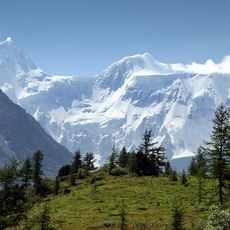
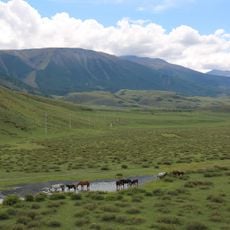
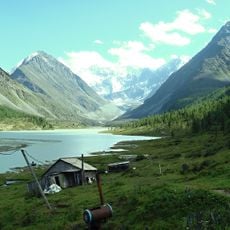
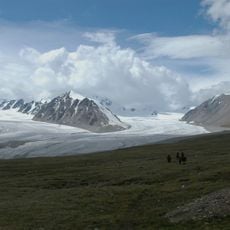
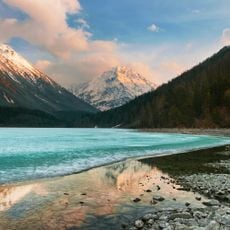
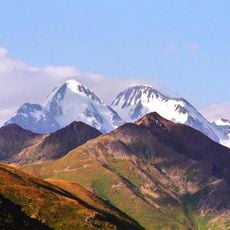
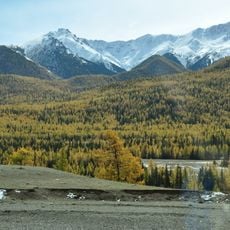
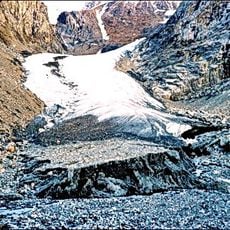
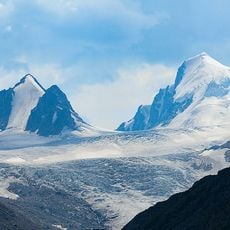
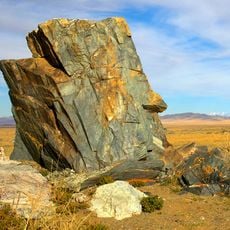
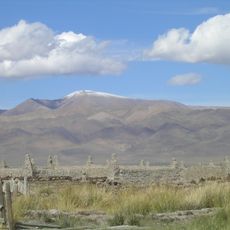
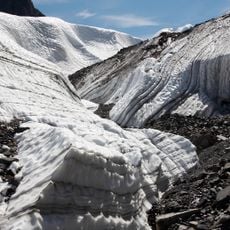
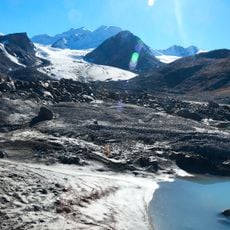
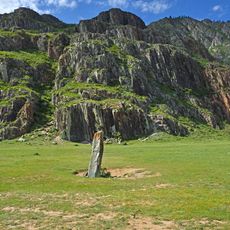
Hüiten Peak, Mountain summit in Ulaankhus, Mongolia and China.
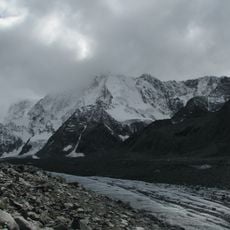
Khüiten Peak is the highest summit of the Altai Range, rising 4,356 metres on the China–Mongolia border. It is the highest point in both Mongolia and Altay Prefecture, and its summit is covered in snow year-round. The peak is one of five summits of the Tavan Bogd massif; another peak about 2.5 km north marks the Russia–Mongolia–China tripoint.
Mongolian mountaineers first climbed Khüiten Peak in 1956, according to Mongolian sources; the peak was later included in a 2013 list of ten notable climbs issued by the National Geographic Institute. The summit lies in Tsengel sum, Bayan-Ölgii aimag, on the Mongolian-Chinese border.
Mongolian names the peak Khüiten orgil, "Cold Peak", while China calls it Youyi Feng, "Friendship Peak"; Mongolia also used Nairamdal uul, "Friendship Mountain", officially in the past. The summit lies on the border, and the Tavan Bogd massif's five peaks include a second, about 2.5 km north, where Russia, Mongolia and China meet.
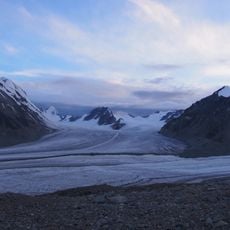
The summit sits on the China-Mongolia border in Bayan-Ölgii's Tsengel sum, so crossings and permits involve both countries. Approach from the Mongolian side via the Tavan Bogd massif; the nearest peak marking the Russian tripoint lies about 2.5 km north. Snow covers the peak year-round, so plan for glacier travel and cold-weather gear.
Khüiten Peak is one of the five peaks of the Tavan Bogd massif. About 2.5 km north of it, a neighbouring peak marks the tripoint where Russia, Mongolia and China meet; international agreements and maps name that peak Tavan Bogd Peak, or Mount Kuitun in Chinese.
The community of curious travelers
AroundUs brings together thousands of curated places, local tips, and hidden gems, enriched daily by 92,940 contributors worldwide.