Relics of Tiedian Kiln, Archaeological site and kiln ruins in Jinhua, China
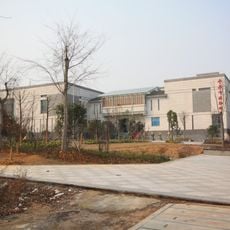
Relics of Tiedian Kiln is an archaeological site containing ancient ceramic production facilities with preserved kilns, work areas, and numerous pottery fragments. The layout shows the different zones where potters worked and how ceramics were manufactured at scale.
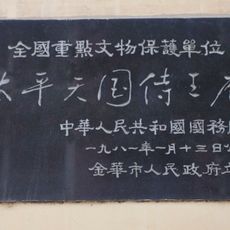
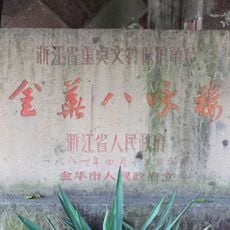
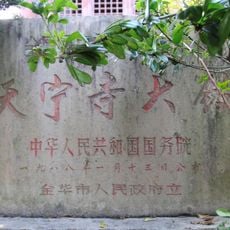
The Tiedian kiln operated during the Song and Yuan dynasties in Tiedian village, Langye town, Jinhua, Zhejiang. Ceramics fired here, including opaque-glaze wares, were part of the cargo of the Sinan shipwreck, a vessel bound for Japan. The site was discovered in 1981 and has three surviving kiln locations; it was listed as a Major Historical and Cultural Site Protected at the National Level in 2001 (5th batch, no. 43).
The pottery found here reveals how craftspeople refined and passed down their skills across generations. You can see in the fragments how shapes and firing techniques evolved over time.
The site is best explored during daylight hours to clearly see the structures and fragments. Sturdy shoes are recommended as the ground is uneven and walking between ruins is involved.
Shards of this kiln's wares were recovered from the Sinan shipwreck, a vessel whose cargo was bound for Japan. The site was found in 1981 and has three kiln locations: No. 1 on a slope about 200 m west of Tiedian village, covering some 20,000 sq m, No. 2 southwest of the village at about 800 sq m, and No. 3 at the southeast entrance of the village centre at about 1,000 sq m.
The community of curious travelers
AroundUs brings together thousands of curated places, local tips, and hidden gems, enriched daily by 94,014 contributors worldwide.