Bayonglou, Historical tower in Jinhua, China
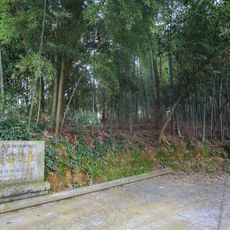
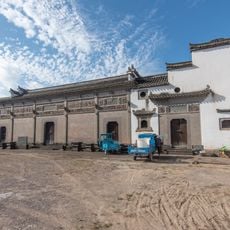
Bayonglou stands on a tall stone platform on Bayong Road in Wucheng District, Jinhua, facing south toward the Wu River. The present building is a Qing-dynasty reconstruction from the Jiaqing reign, extensively repaired in 1984 and again in recent years. Ai Qing wrote the three characters "八咏楼" on its plaque, and beside the tower is the Zhu Dadian Cave.
Shen Yue, governor of Dongyang Commandery, built the tower in 494, the first year of the Longchang era of the Southern Qi, and named it Xuanchanglou. He wrote eight poems about it, known together as the Eight Poems, and from the Tang dynasty the building was called Bayonglou. The present structure was rebuilt under the Jiaqing emperor of the Qing and extensively repaired in 1984.
The name comes from the eight poems Shen Yue wrote for the building, grouped as the "Eight Poems." Li Qingzhao, sheltering in Jinhua, wrote "Inscribed on Bayonglou": "Three thousand li of waterways reach the southern lands; the air presses on fourteen prefectures of the river city." Ai Qing brushed the three characters "Bayonglou" for the tower.
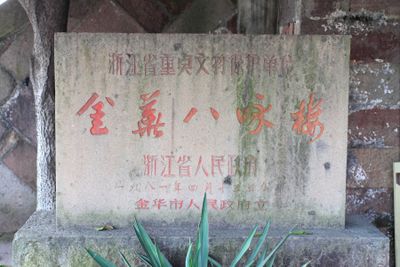
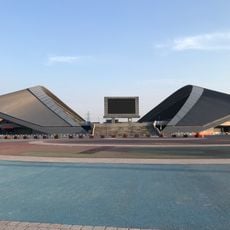
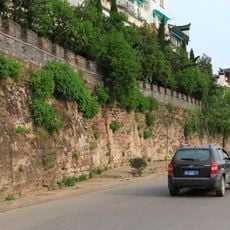
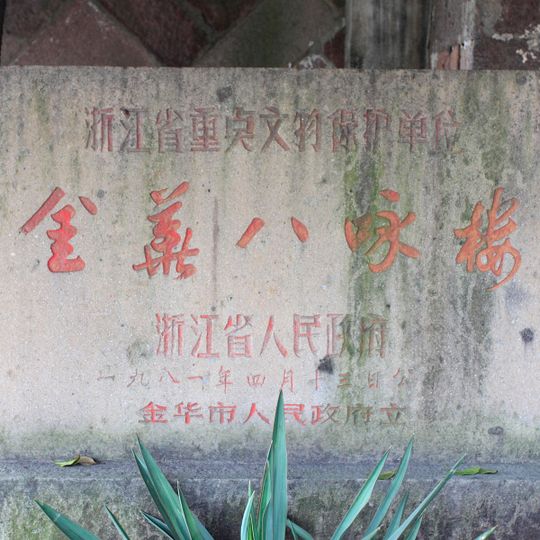
The tower stands on a high stone platform on Bayong Road in Wucheng District, facing south toward the Wu River. Bayong Park, built on the former Bayong Shoal in front of it in 2004, gives an open approach to the base. The site is a Zhejiang provincial cultural relic protected since 1981.
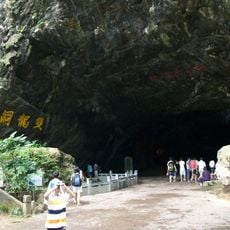
The tower's name comes from eight poems Shen Yue wrote about it; from the Tang dynasty the building was called Bayonglou after them. The three characters on the plaque were brushed by the poet Ai Qing. Beside the tower stands the Zhu Dadian cave, named for the Ming official who died there.
The community of curious travelers
AroundUs brings together thousands of curated places, local tips, and hidden gems, enriched daily by 95,593 contributors worldwide.