Nanjing Museum, National art museum in Nanjing, China.
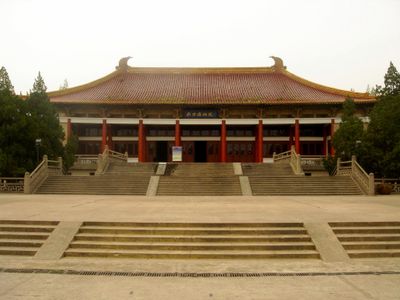
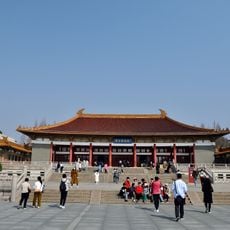
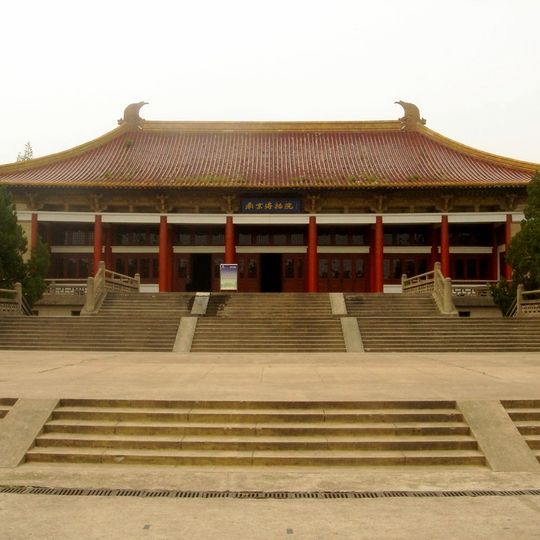
The Nanjing Museum occupies a 1930s building on a raised three-tiered white stone platform at the end of a broad lawn, its nine-bay hall covered in brown glazed tiles with stout brackets in a style modelled on Liao-dynasty architecture. Ten red columns divide the facade, which carries a blue plaque with gold characters above the entrance. Behind, the modern extension holds the art and special exhibition halls.
The institution began in 1933 as a preparatory department for a national museum. Its collections were relocated to Southwest China during wartime to preserve them from destruction.
The collections display Ming and Qing porcelain, ancient calligraphy, and traditional Chinese paintings spanning different periods. You can observe how these works reflect the artistic preferences and craftsmanship of past dynasties.
The museum stands on Zhongshan East Road, 472 metres east of Exit 1 of Minggong Station on Metro Line 2, on the north side of the road. The historical hall sits at the end of a broad lawn, reached by a wide flight of pale stone steps. The art hall lies west of the main hall, the Republic of China hall below ground east of it, and the digital hall underground between the historical and special exhibition halls.
The museum holds 2,211 crates of imperial objects moved south from the Forbidden City, about 100,000 pieces, mostly Ming and Qing official porcelain and court tableware. Their ownership has been disputed between the Palace Museum and the Nanjing Museum for decades, and a 2004 statement by director Xu Huping claimed over 200,000 of the museum's 400,000 items came from the 5,415 crates of imperial-travel objects.
The community of curious travelers
AroundUs brings together thousands of curated places, local tips, and hidden gems, enriched daily by 92,930 contributors worldwide.