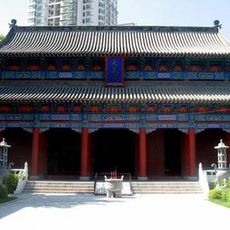
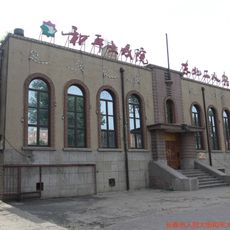
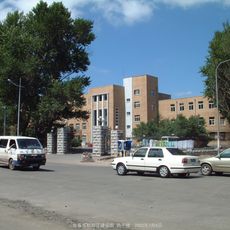
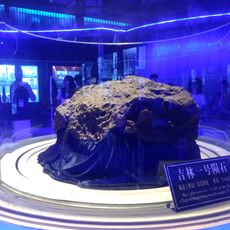
吉林文庙, Confucian temple in Jilin City, China.
The Jilin Confucius Temple consists of multiple halls, courtyards, and pavilions arranged symmetrically according to traditional Chinese architectural principles. Each building occupies a defined position within the overall layout, creating a balanced and ordered composition.
The temple was established during the Qing Dynasty as a center for imperial examinations and the education of local scholars in Confucian classics. It served as an important institution for intellectual development in the region during that era.
The temple remains a place where traditional Chinese rituals honoring Confucian teachings take place, with participants in historical garments gathering to keep ancient customs alive. Visitors can observe how these practices continue to serve as expressions of respect for scholarly tradition and educational values.
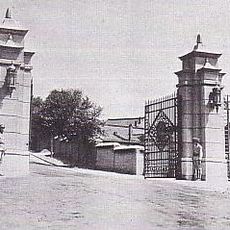
The complex faces south, with its gate on Nanchang Road in Changyi District; the axis runs from the screen wall and Pan Pond through the Zhuangyuan Bridge and Lingxing Gate to Dacheng Hall at the rear. The grounds cover 16,354 square metres, so allow time to walk the full axis and the side courtyards.
The temple was first built in 1736, during the Qianlong reign, and was moved to its present site and enlarged in 1909, the first year of the Xuantong reign. It is the earliest Confucian temple the Qing dynasty founded in Northeast China, and in 2006 it was listed in the sixth batch of Major Historical and Cultural Sites Protected at the National Level.
The community of curious travelers
AroundUs brings together thousands of curated places, local tips, and hidden gems, enriched daily by 94,041 contributors worldwide.