The Museum of War Crime Evidence by Japanese Army Unit 731, History museum in Pingfang District, Harbin, China
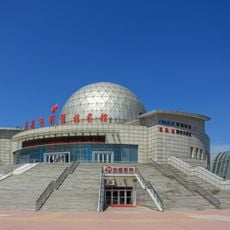
The Museum of War Crime Evidence by Japanese Army Unit 731 is a site museum at 47 Xinjiang Street, Pingfang District, Harbin, built on the former Unit 731 complex. Its new building, opened on 15 August 2015, covers 9,997 square metres and has 5,000 square metres of exhibition space. The displays are arranged in six zones, from the Japanese bacterial warfare programme and the unit's human experiments to the development and use of bacterial weapons, evidence and trials. Photographs form the core of the collection, alongside instruments such as scissors and tweezers identified as experimental tools, and a panel engraved with the names of Chinese victims.
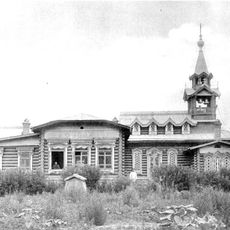
The site was built in 1933, and from 1936 Unit 731 of the Imperial Japanese Army used 6.1 square kilometres here as a special military zone for research and production of biological weapons. In August 1945, before surrendering, the unit blew up most of the buildings, leaving the layout visible today. The museum opened in 1985 and moved into a new building on 15 August 2015.
The museum serves as a place where visitors can confront the documented reality of wartime atrocities and understand their lasting impact on people's memory. Walking through the halls, you see how this history remains relevant to visitors and researchers seeking to grasp what happened.
Plan to spend several hours reviewing the displayed materials and understanding the documentary evidence on offer. The collection is substantial and requires time to absorb the information presented in each exhibition space.
The site keeps the remains of the unit's own facilities: a boiler room for experiments, a crematorium for corpses, a room for breeding laboratory rats, a frostbite laboratory and a bacterial bomb factory. A panel inside lists the names of Chinese victims.
The community of curious travelers
AroundUs brings together thousands of curated places, local tips, and hidden gems, enriched daily by 93,320 contributors worldwide.