Guangji Temple, Buddhist temple in Jinzhou, China
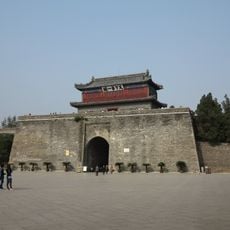
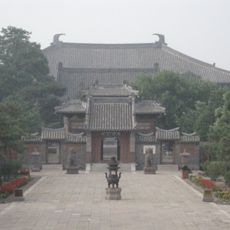
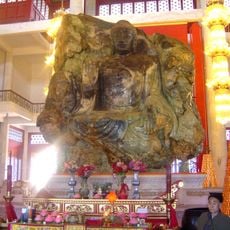
Guangji Temple is a Buddhist shrine in Jinzhou featuring multiple interconnected buildings that display traditional Chinese architectural design and craftsmanship. The complex lies within the city center and houses various halls containing religious artworks and statuary.
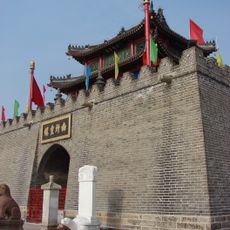
The temple was first called Puji Temple and was expanded and rebuilt in 1060, when it took the name Guangji. It burned in 1809 and was rebuilt by 1826, and the complex, including the Tianhou Palace of 1725 and the Yijun Martyrs Shrine of 1898, was listed as a Major Historical and Cultural Site in 2001.
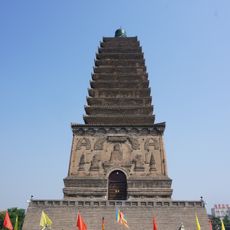
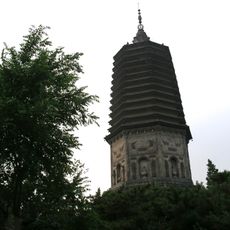
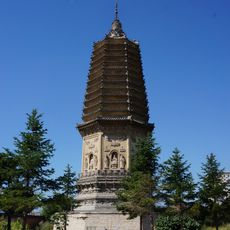
The complex takes its name from the temple, which was called Puji Temple until the Liao emperor Daozong renamed it Guangji Temple after building the pagoda to hold his mother's relics. The Tianhou Palace was financed by merchants from Jiangsu, Zhejiang and Fujian, and its name honours the sea goddess Mazu.
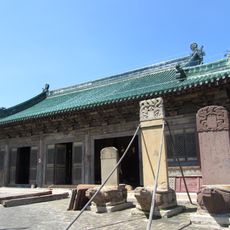
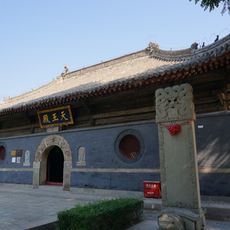
The complex sits in the Guta district of central Jinzhou and can be reached on foot; the temple, the Tianhou Palace and the Yijun Martyrs Hall stand together, with the brick pagoda rising beside the temple halls. The halls are entered from the south along the central axis, and the stele pavilions stand north of the front hall, east and west of the steps.
The Guangji Pagoda is a solid brick structure: its octagonal body has a Buddha niche on each face and six bronze mirrors set into every side, with wind bells hanging from the corners of its thirteen eaves. The Yijun Martyrs Hall retains 21 spirit tablets in a red wooden shrine, survivors of more than 2,000 once kept there.
The community of curious travelers
AroundUs brings together thousands of curated places, local tips, and hidden gems, enriched daily by 93,802 contributors worldwide.