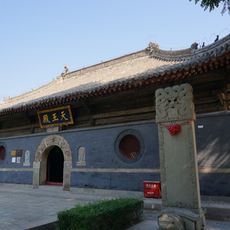
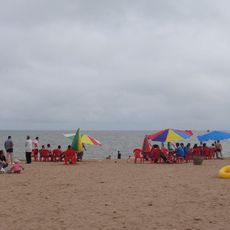
Jiangnushi Site, Archaeological ruins in Suizhong County, China.
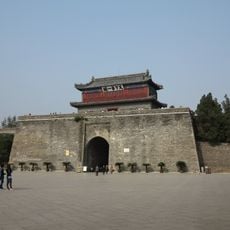
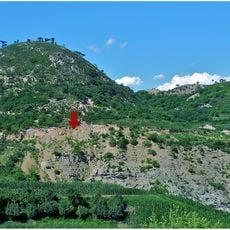
Jiangnushi Site is a Qin to early Western Han palace complex on the Bohai coast at Zhimaowan, Wanjiacun, Suizhong County. Its main structure, the Jieshi Palace, is a rectangular multi-level building on a rammed-earth platform whose central axis faces three offshore sea stacks called Jiangnüfen. Excavations have exposed column bases, collapsed roof tiles, hollow step bricks and a drainage system.
The site was discovered in 1982 and excavated from 1984. Its main structure, the Jieshi Palace, is a Qin dynasty high-platform palace built on rammed-earth foundations, identified as a temporary palace used by Qin Shi Huang and Han Wudi on their eastern tours. It is the first Qin palace site found outside the Guanzhong region. In 1988 it was listed as a Major Historical and Cultural Site Protected at the National Level.
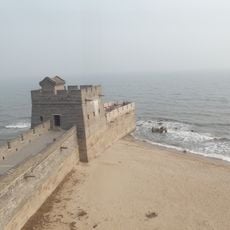
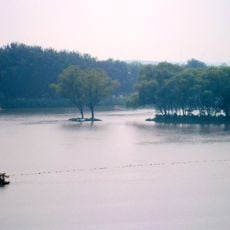
The three offshore reefs facing the palace axis are called Jiangnüfen, said in local legend to mark where Meng Jiangnü drowned herself; scholars identify them with the Jieshi rock recorded in Qin and Han texts. Villagers still tell her story, and the reef name has passed to the whole site.
The location sits in a rural area of Suizhong County, so it helps to research the exact route beforehand. Visitors should prepare for outdoor conditions and bring appropriate clothing for variable weather.
The site's name comes from the three offshore sea stacks called Jiangnüfen, said in local legend to mark where Meng Jiangnü drowned herself; scholars identify these rocks with the Jieshi recorded in Qin and Han texts. The largest half-round eave tile with kui-dragon pattern found here is the biggest of its kind yet discovered.
The community of curious travelers
AroundUs brings together thousands of curated places, local tips, and hidden gems, enriched daily by 93,982 contributors worldwide.