Lushun Museum, Museum complex in Lushunkou District, Dalian, China
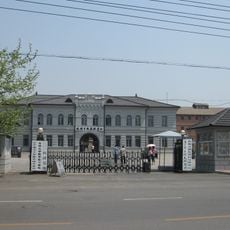
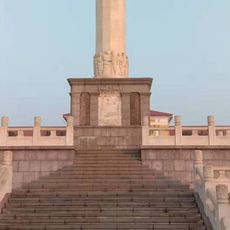
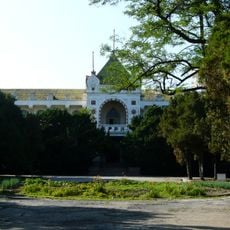
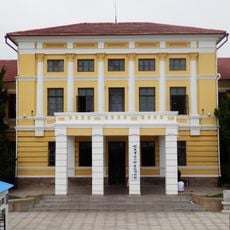
Lushun Museum consists of a main building completed in 1918 in a Renaissance eclectic style and a branch that opened in 2001. Its more than 60,000 objects are arranged in about 20 halls, among them snuff bottles, cloisonné, ancient coins, ceramics, lacquerware, Japanese painting and calligraphy, and Xinjiang finds. A Sino-Soviet friendship monument stands on the square in front, surrounded by cherry trees.
Founded in November 1915 as the Manchuria-Mongolia Products Exhibition Hall, it was renamed the Kwantung Government Museum in 1918 and took its present name in 1934. The Soviet army took over in 1951 and returned it to China in 1955. It closed during the Cultural Revolution and reopened on 1 May 1972.
The museum's name changed with each ruling power: founded in 1915 as the Manshu-Mongolian Products Exhibition Hall, renamed Lushun Museum in 1934, and given its current name by Guo Moruo in 1954. Its 20 halls include snuff bottle, enamel, ancient currency, ceramics, mummy, Xinjiang relics, lacquerware and Japanese painting galleries.
The site is reachable by public buses with a short walk from the nearest stop to the buildings. Wear comfortable shoes since you will be walking along streets to access the complex.
The collection holds mummified remains gathered during expeditions to Central Asia between 1901 and 1910. These discoveries were recovered from burial sites and are preserved in the exhibition spaces, making the institution an unusual repository for such finds.
The community of curious travelers
AroundUs brings together thousands of curated places, local tips, and hidden gems, enriched daily by 93,870 contributors worldwide.