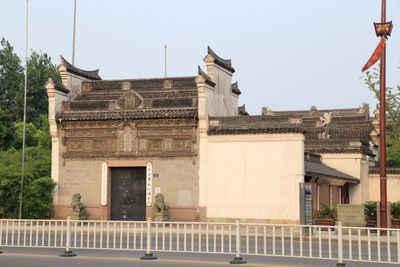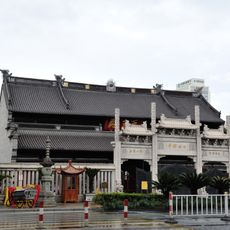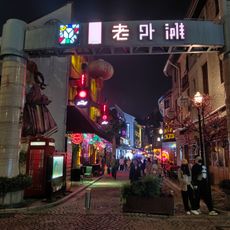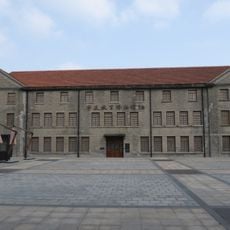
Qing'an Guildhall, Protected historical site in Yinzhou District, China
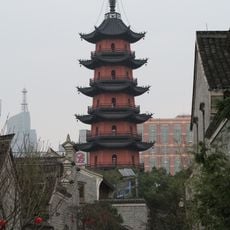
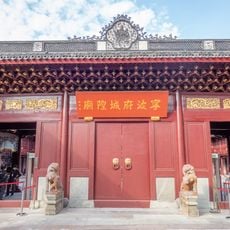
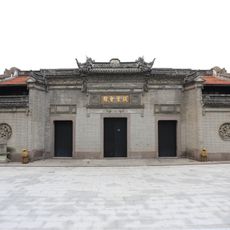
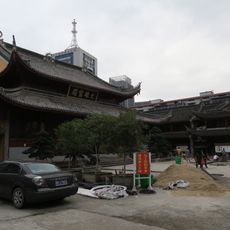
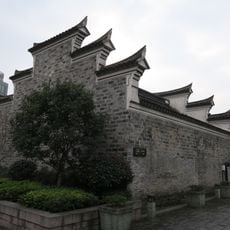
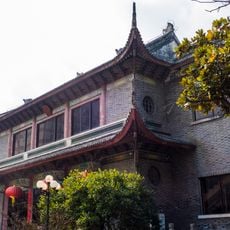
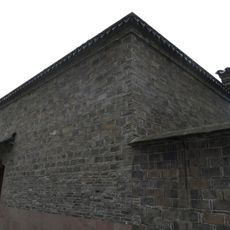
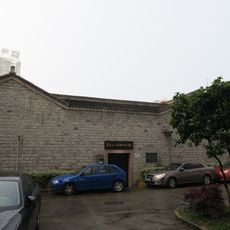
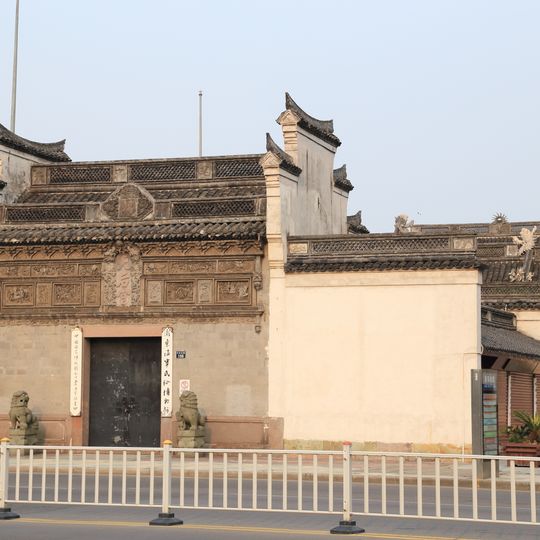
Qing'an Guildhall now houses the East Zhejiang Museum of Maritime Heritage and Folk Arts, showcasing traditional Chinese architecture with intricate wooden carvings throughout all building sections. The complex contains several halls and courtyards whose structures reflect the typical features of a wealthy merchant building from that period.
The hall was built in 1191 as a temple dedicated to the sea goddess Mazu, serving religious and commercial purposes for centuries. Fujianese merchants significantly rebuilt it in the mid-1800s, and extensive restoration work modernized the structures between 1997 and 2001.
The Great Hall displays an opera stage framed by stone carvings showing Chinese folklore motifs, with dragons and phoenixes woven into the architectural design. You can see how merchant life intertwined with artistic expression through the performances and celebrations that took place here.
The complex sits near the former waterfront outside old city walls and is easily reached on foot, with plenty of space to explore the various rooms and halls. Most areas are quite accessible, though some stairs and narrow passages may present challenges for visitors with mobility restrictions.
The museum displays artifacts from eastern Zhejiang waters, including the steering wheel from the SS Jiangya that sank in 1948, testifying to the site's connection with the region's maritime history. This piece reminds visitors how closely the location ties to the seafaring dramas and trade that shaped coastal communities.
The community of curious travelers
AroundUs brings together thousands of curated places, local tips, and hidden gems, enriched daily by 90,830 contributors worldwide.