Jia Yi's Former Residence, Ancient scholar residence in Tianxin District, China.
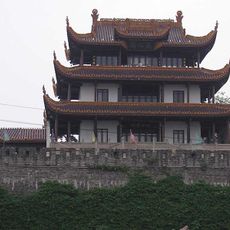
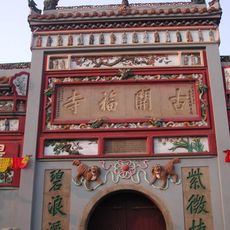
Jia Yi's Former Residence covers about 2,490 m² in Tianxin District, with roughly 350 m² of buildings around the Grand Preceptor Well. The compound includes the gate tower, Grand Preceptor Hall, Grand Preceptor Temple, Xunqiu Cottage, Old Tablet Pavilion, stone tablet corridor and an exhibition on Jia Yi's life.
Jia Yi lived here from 177 to 174 BC as Grand Preceptor to the King of Changsha, writing the 'Ode to Qu Yuan' and the 'Owl Ode' during his exile. The residence was rebuilt in 1580 under the Wanli Emperor and renamed the Qu Yuan and Jia Yi Temple. The Wenxi Fire of 1938 destroyed about ninety percent of the buildings, leaving only the Grand Preceptor Hall; the complex was rebuilt in November 1996.
The residence takes its name from Jia Yi, who served as Grand Preceptor to the King of Changsha from 177 to 174 BC and wrote the 'Ode to Qu Yuan' and the 'Owl Ode' here. In 1580, during the Wanli era, Qu Yuan was added to the shrine, and the site became known as the Qu Yuan and Jia Yi Temple, later shortened to Qu Jia Shrine in the Qing dynasty. Changsha is called the 'home of Qu and Jia' because of these two figures.
The site is located in the older part of Changsha's center and works well to visit while exploring the surrounding historic streets. Coming in the morning or early afternoon helps you see the buildings and displays better in natural light.
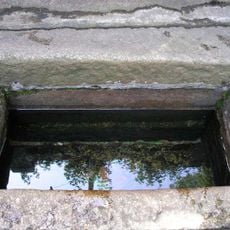
The Taifu Well has been preserved for over two thousand years and is considered China's longest-preserved and longest-used ancient well. During a major restoration in 1999, gold, silver, jade objects and coins were unearthed from it. Du Fu's poem lines are inscribed on the pavilion pillars beside it, giving the well the alternate name Changhuai Well.
The community of curious travelers
AroundUs brings together thousands of curated places, local tips, and hidden gems, enriched daily by 94,001 contributors worldwide.