Tianxin Pavilion, Ancient pavilion in Tianxin District, China.
Tianxin Pavilion stands on the surviving section of Changsha's Ming-era city wall, 226.2 metres long and 13.4 metres high. Its rebuilt main pavilion, completed in 1984, rises 14.6 metres over three storeys with chestnut-coloured tiles and stone balustrades, flanked by two-storey side pavilions linked by covered galleries.
The building was originally constructed during the Ming Dynasty in the 14th century and later served as a military command post during the Taiping Rebellion. It played an important role in military operations of that era.
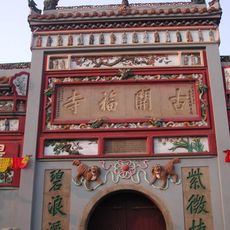
The Chonglie Gate, a granite memorial arch 8.5 metres wide and 5.9 metres high, was erected in 1946 in memory of soldiers who died fighting Japan; it was funded by Chiang Kai-shek, Chen Cheng and Zhang Zhizhong. Its couplets read "Qi tun Hu Jie, yong wei shan he" and "Fan nan er wang qi si, suo yu you shen yu sheng". Destroyed during the Cultural Revolution, it was rebuilt in 2006.
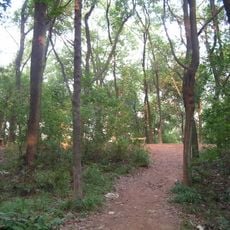
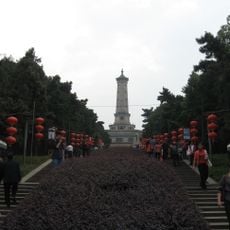
The pavilion stands on the surviving stretch of the old city wall, 226.2 m long and 13.4 m high, reached from the Tianxin Park side; the main tower is entered by stairs, and the Chonglie Pavilion sits on the approach. The park is a compact 3-hectare garden with a teahouse and pavilions where elderly opera fans gather in the mornings.
Hidden beneath the structure are secret tunnels that proved crucial during historical military engagements. These underground passages reveal the strategic engineering used in military fortifications of that period.
The community of curious travelers
AroundUs brings together thousands of curated places, local tips, and hidden gems, enriched daily by 93,975 contributors worldwide.