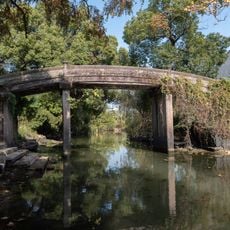
毗山遗址, Archaeological site in Zhejiang, China.
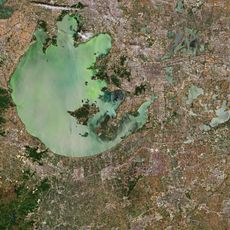
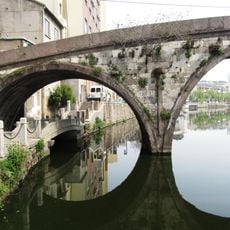
Pishan Site is an archaeological site around Pishan hill in Baliadian Town, Wuxing District, Huzhou, Zhejiang, about 2.5 km east of the city center and 7 km northwest of the Qianshanyang site. It lies in the Tiaoxi River basin. It was found in winter 1957 during dredging of the Sanliqiao River, when Zhang Baoming, deputy director of the Huzhou culture and education bureau, saw grey pottery dou and three-legged pans in a soil mound section near Jinjia village on the west bank.
This site began in the late Neolithic period and was repeatedly occupied over many thousands of years. The different settlement layers tell the story of long periods of human presence and development at this location.
The pottery and tools discovered here show how people built homes and lived together in this place. The findings suggest that residents had skilled crafts and organized themselves to work and live as a community.
The site lies around Pishan hill in Balidian town, Wuxing district, about 2.5 km east of Huzhou's urban area and roughly 7 km northwest of the Qianshanyang site. It was found in 1957 during dredging of the Sanliqiao River, on a mound by Jinjiadou village on the west bank. It has been a provincial archaeological site park since 2013.
Soil samples and sediment layers reveal important information about climate changes in the past. This data helps researchers understand how weather and environmental conditions affected the early people living here.
The community of curious travelers
AroundUs brings together thousands of curated places, local tips, and hidden gems, enriched daily by 93,589 contributors worldwide.