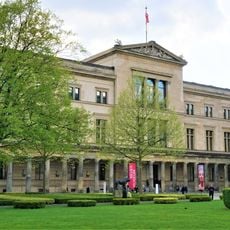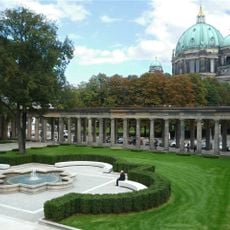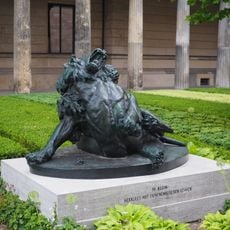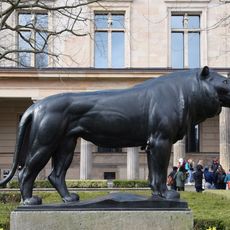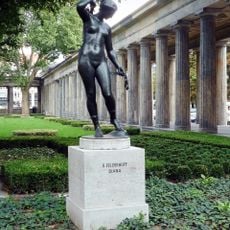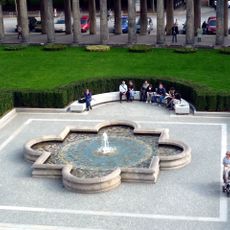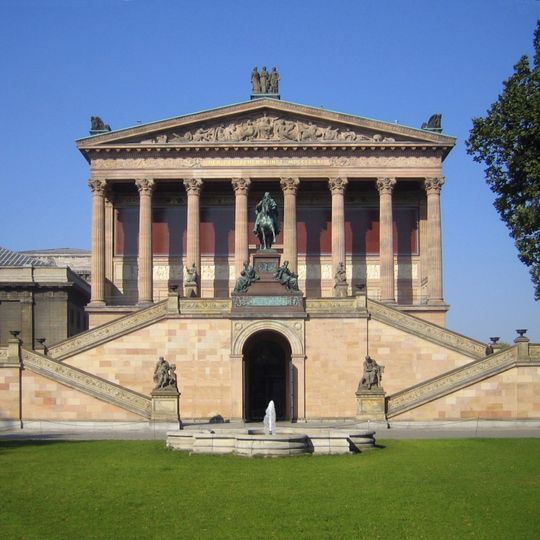
Alte Nationalgalerie, Art museum on Museum Island, Berlin, Germany.
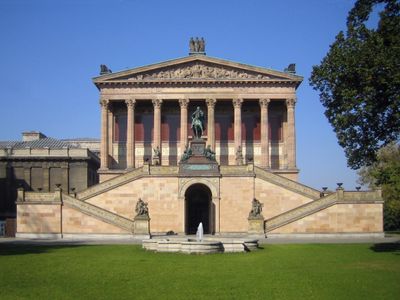
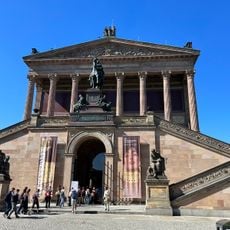
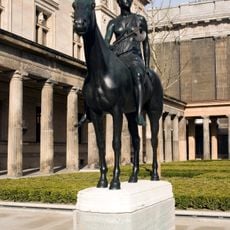
The Alte Nationalgalerie is a listed art museum on Museum Island in Berlin, built from 1862 to 1876 to plans by Friedrich August Stüler and completed by Johann Heinrich Strack. Its tan and reddish-brown stone facade combines a temple front of eight fluted columns and a sculpted pediment with an apse and a grand exterior staircase. A bronze equestrian statue of Frederick William IV stands on the stairs, and the interior frieze by Otto Geyer depicts German history.
The gallery opened its doors in 1876 after banker Joachim Heinrich Wilhelm Wagener donated his collection, following a design by Friedrich August Stüler. Construction began only after the architect's death and was completed by his student Heinrich Strack.
The name Alte Nationalgalerie (Old National Gallery) marks it as Berlin's first repository of modern art, founded in 1861 around banker Joachim Heinrich Wilhelm Wagener's gift of 262 paintings. The interior staircase carries a frieze by Otto Geyer tracing German history from prehistoric times to the 19th century, and the collection grew through directors such as Hugo von Tschudi, who brought French Impressionists to Berlin.
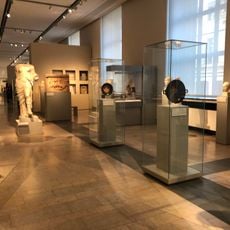
The gallery is open Tuesday through Sunday from 10 in the morning until 6 in the evening, with admission at 14 euros for adults and free for visitors under 18. The exhibition rooms span several floors, so plan enough time for a thorough visit.
A grand staircase leads up to the entrance, crowned by an equestrian statue of Frederick William IV and a portico featuring the figure of Germania as protector of the arts. This monumental arrangement was designed to emphasize the building's status as a temple of art.
The community of curious travelers
AroundUs brings together thousands of curated places, local tips, and hidden gems, enriched daily by 94,077 contributors worldwide.