Museum for prehistory and early history, Archaeological museum in Mitte, Germany
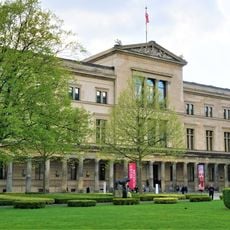
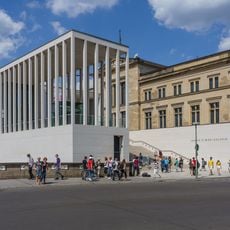
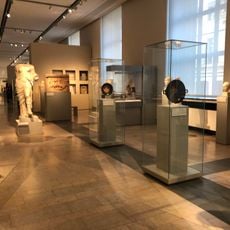
The Museum für Vor- und Frühgeschichte occupies the Neues Museum on Museum Island, where its permanent exhibition is laid out across several halls. The tour begins in the Rudolf-Virchow-Studio, continues through the Stone and Bronze Age hall, the Gold Room with the Berlin Gold Hat, and the Schliemann Hall, which holds Trojan finds including silver vessels from the so-called Treasure of Priam.
The collection began around 1830, when the Hohenzollerns assembled finds in Schloss Monbijou as the Museum Vaterländischer Altertümer. It moved to the Neues Museum, in 1886 to the Ethnographic Museum on Prinz-Albrecht-Strasse and in 1921 to the Martin-Gropius-Bau, renamed Staatliches Museum für Vor- und Frühgeschichte in 1931. From 1960 it occupied the Langhans-Bau at Schloss Charlottenburg; since October 2009 it has been shown in the Neues Museum.
Since 2015, the museum has run "Multaka – Treffpunkt Museum", guided tours in Arabic and Persian for Arabic- and Persian-speaking visitors. The Arabic word multaka means meeting point, and the tours connect refugees and other visitors from the Middle East with the collections.
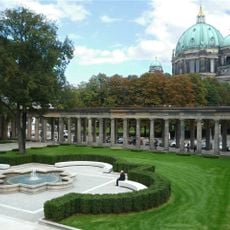
The museum is reached through the Neues Museum on Museum Island, where several institutions share the building. The displays occupy six halls on three floors, so plan your route and allow enough time to see them in sequence.
In Hall 5, the bronze cuirass from Stična is displayed alongside finds from the Hallstatt period in the Alps. The armour comes from a princely grave in present-day Slovenia and dates to the 7th century BC. It is one of only five complete cuirasses known from that period.
The community of curious travelers
AroundUs brings together thousands of curated places, local tips, and hidden gems, enriched daily by 93,093 contributors worldwide.