Museum Island, Museum complex on Spree Island in Mitte, Germany
Museum Island is a museum complex on the northern part of Spree Island in central Berlin, made up of five museums built between 1830 and 1930. The Bode Museum at the northern tip rises from the water: pale grey stone, two low arches carrying the building over a channel, a row of arched openings and a row of rectangular windows framed by columns, and above them a rounded, ribbed dark brown dome with a small lantern. Two flagpoles with red flags stand on the roofline, and a rectangular wing with repeated rows of windows extends to the right.
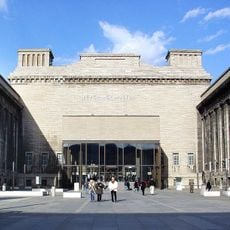
The first building on the island was completed in 1830 with the Altes Museum, intended as a public collection for the people of Berlin. The remaining four structures followed until 1930, with the Pergamon Museum being the last to be finished and today remaining partly closed due to renovation work.
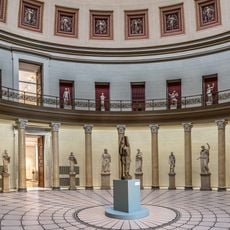
The Bode Museum, at the northern tip, opened in 1904 as the Kaiser-Friedrich-Museum and was renamed in 1956 after Wilhelm von Bode, the museums' long-serving director general. It holds sculpture collections and late Antique and Byzantine art. The Alte Nationalgalerie, completed in 1876, displays 19th-century art donated by banker Joachim H. W. Wagener.
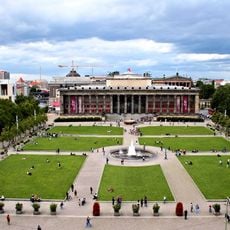
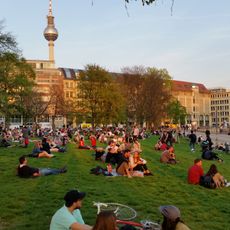
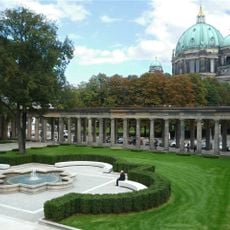
Anyone wishing to see all the collections should plan at least a full day, as each building covers several floors and numerous rooms. The structures stand close together, so you can walk from one to the next, with the Lustgarten serving as a central open space.
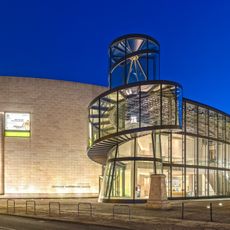
The James Simon Gallery from 2019 functions as a shared entrance for several museums and connects the historic buildings with modern glass panels and white concrete columns. Visitors can move from there directly into the underground link between the structures without having to return to the street.
The community of curious travelers
AroundUs brings together thousands of curated places, local tips, and hidden gems, enriched daily by 93,119 contributors worldwide.