Berlin Cathedral, Lutheran church on Museum Island, Berlin, Germany
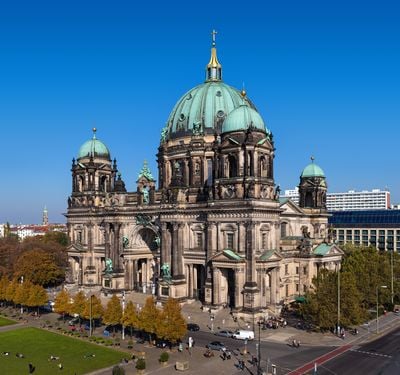
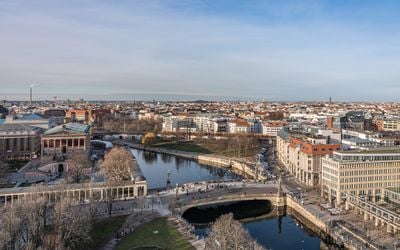
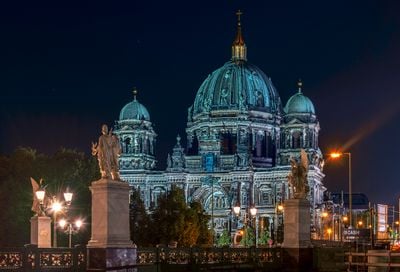
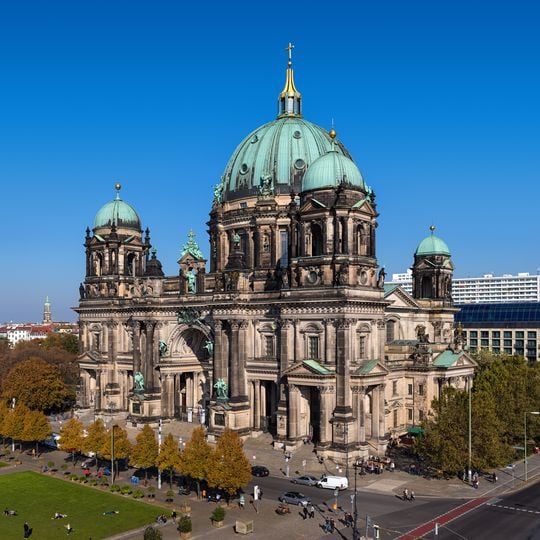
Berlin Cathedral is a Lutheran church on Museum Island, built in Renaissance Revival and Baroque Revival styles. The building measures about 114 meters (374 feet) in length and 74 meters (243 feet) in width, with a main dome rising up to 98 meters (322 feet).
The present cathedral was built from 1894 to 1905 to plans by Julius Raschdorff, on the orders of Emperor William II; the foundation stone was laid on 17 June 1894 and the church was consecrated on 27 February 1905. It replaced the Schinkel Cathedral, which had been remodeled in the early 19th century. Severely damaged in 1944, the exterior was rebuilt in simplified form by 1984 and the interior restored by 2002.
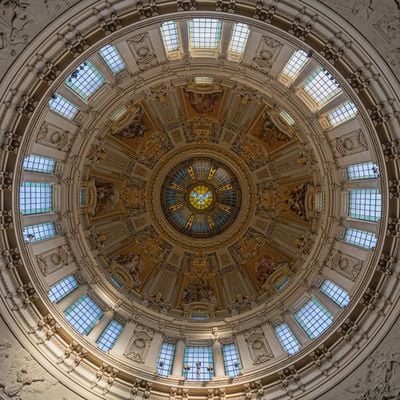
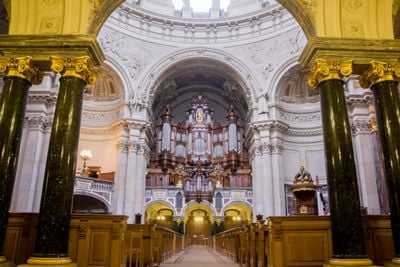
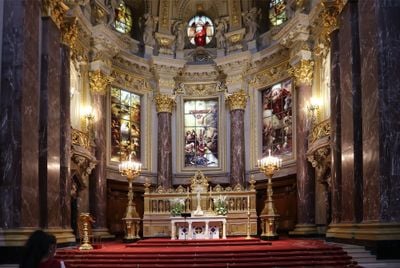
The church belongs to the Protestant congregation, which holds services here and plays classical music on a large organ. Visitors often see weddings and baptisms taking place, while tourists walk through the main nave and look up at the decoration inside the dome.
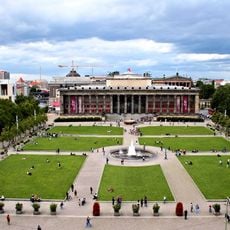
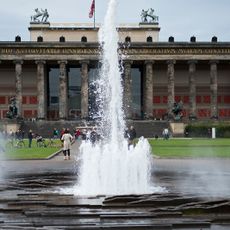
The cathedral stands at the edge of the Lustgarten on Museum Island, facing the Berlin Palace square, with the entrance through the main portal on the west facade. The dome gallery is reached by a long stair climb; the crypt below the Sermon Church is entered separately and covers almost the entire basement.
In the crypt below ground level, 94 members of the Hohenzollern dynasty rest in sarcophagi from different centuries. Some of the oldest burial sites date back to the 16th century and show inscriptions in Latin and German.
The community of curious travelers
AroundUs brings together thousands of curated places, local tips, and hidden gems, enriched daily by 92,270 contributors worldwide.