Schleusenbrücke, Steel bridge in Berlin-Mitte, Germany.
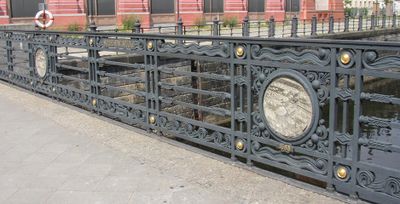
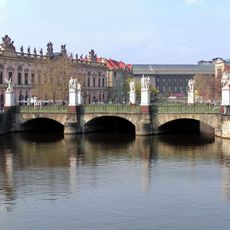
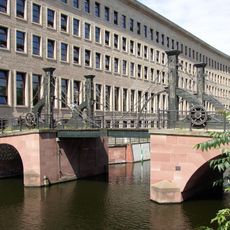
Schleusenbrücke crosses the Spreekanal and connects Werderscher Markt with Schloßplatz as a steel girder structure. The 23.9 meter long construction consists of multiple steel beams assembled in classic industrial building style.
The bridge was built in 1916 under architect Robert Schirmer's direction during a period of intensive infrastructure expansion in Berlin. It stands as evidence of advances in steel construction technology during the early modern era.
The bridge takes its name from the nearby lock canal and has shaped the appearance of this central area for more than a century. Today pedestrians and cyclists cross it daily, moving between the historic quarter and the nearby museums.
The bridge is freely accessible and connects important pedestrian routes in central Berlin, ideal for crossing on foot or by bicycle. Visitors should include the surrounding area with its museums and the castle square in their plans, as it forms part of a larger historic walk.
The technical construction shows distinctive features of early steel building technology with characteristic diagonal bracing typical of Berlin bridge designs from the 1910s. Such details are rarely seen today and make this crossing a special example of engineering craftsmanship.
The community of curious travelers
AroundUs brings together thousands of curated places, local tips, and hidden gems, enriched daily by 91,267 contributors worldwide.