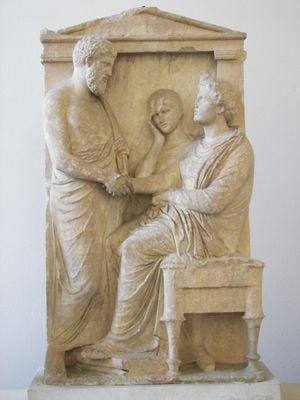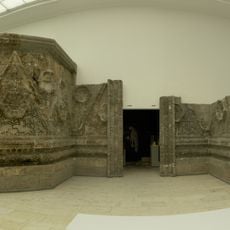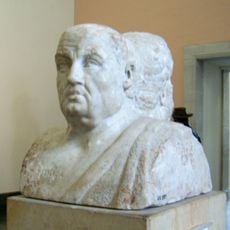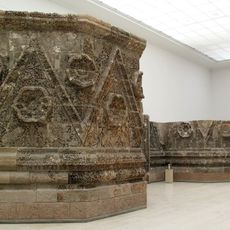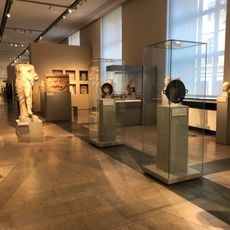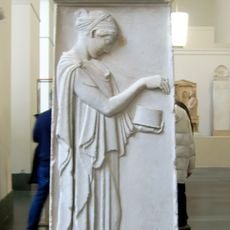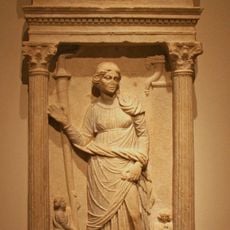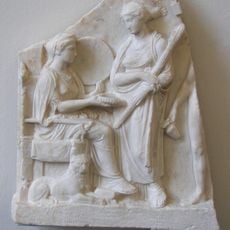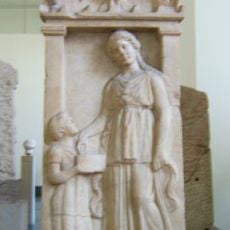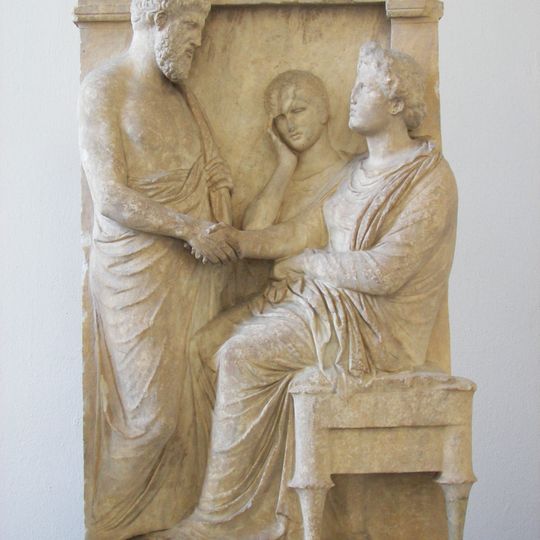
Grave relief of Thraseas and Euandria, Ancient marble relief at Pergamon Museum, Berlin, Germany.
The grave relief of Thraseas and Euandria is a marble stele with dimensions of 160 centimeters in height and 91 centimeters in width. It depicts a standing man and a seated woman with a young servant positioned between them, all carved with careful detail in stone.
The work was created between 350 and 340 BC in Athens near the Kerameikos cemetery. It later entered the Sabouroff collection and joined the Antikensammlung Berlin in 1884.
The relief shows a couple according to ancient Greek custom: the man stands beside his seated wife while a servant mourns nearby. This arrangement reflects how people of that time said goodbye and honored those who had died.
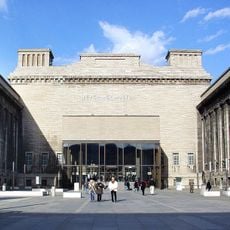
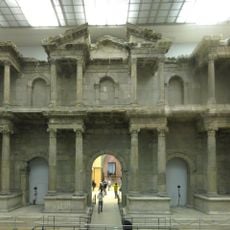
The work is on view in the permanent collection of the Pergamon Museum, where it is displayed alongside other ancient pieces. Visitors can see it as part of the museum's extensive holdings from Mediterranean cultures and learn more about ancient burial traditions.
An inscription on the architrave identifies the figures by their actual names, making this work a rare example of a Greek grave monument where we know exactly who the people are. This name inscription makes the relief feel more personal than many other ancient monuments we encounter.
The community of curious travelers
AroundUs brings together thousands of curated places, local tips, and hidden gems, enriched daily by 92,623 contributors worldwide.