Zentralfriedhof Friedrichsfelde, Cemetery and cultural heritage site in Lichtenberg, Germany
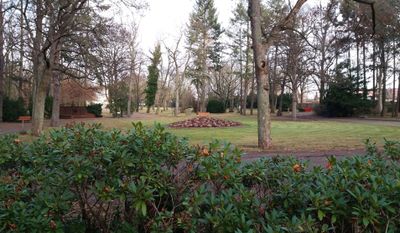
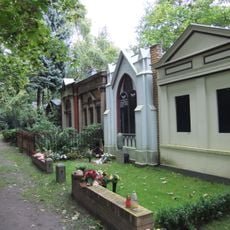
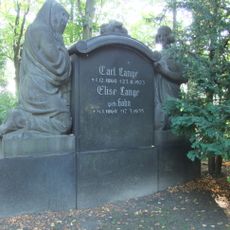
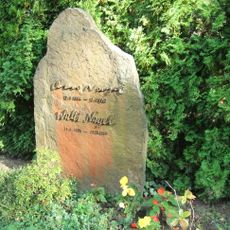
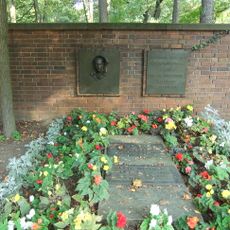
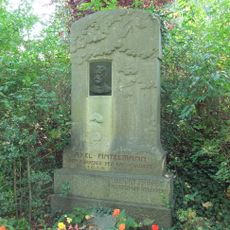
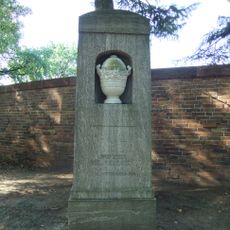
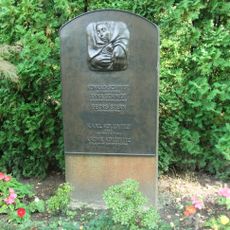
Zentralfriedhof Friedrichsfelde is an expansive burial ground in Berlin's Lichtenberg district with graves, monuments, and stone structures representing many different styles. Wide pathways run through the grounds and connect different sections, allowing visitors to walk through and explore the entire property.
Berlin bought the 1000 by 250 metre site from Carl von Treskow in 1880 for 46,000 marks, and the cemetery opened on 21 May 1881, planned by city garden director Hermann Mächtig on the model of Hamburg's Ohlsdorf. After Wilhelm Liebknecht's burial in August 1900, some 150,000 people followed the procession from Charlottenburg. In 1919 Karl Liebknecht and 32 victims of the Spartacist uprising were buried in a mass grave, and Mies van der Rohe's Monument to the Revolution was unveiled there in 1926.
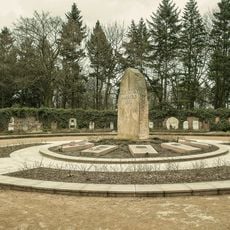
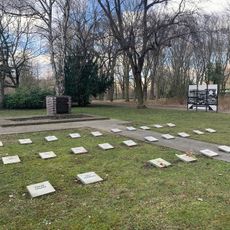
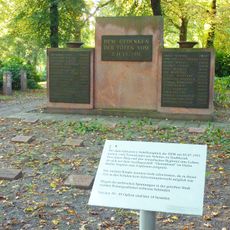
The grounds honor people who shaped German history, and visitors often come to remember important figures from different periods. The pathways lead past monuments that reflect how successive generations chose to commemorate their deceased.
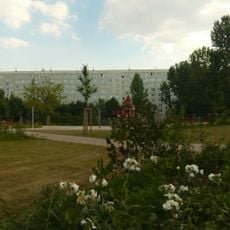
The grounds lie in Berlin's Lichtenberg borough, with the main gate and the Memorial to the Socialists at the front of the site; the Pergolenweg honorary grave section sits directly behind the memorial's semi-circular brick wall. The cemetery also serves as a public park, and a paved path curves along the lawn near the central mound. The site was enlarged by seven hectares purchased in 1947.
The 1926 Monument to the Revolution, designed by Ludwig Mies van der Rohe, was a red brick structure 12 metres wide and 6 metres high. The National Socialists destroyed it in January 1935, and it was never rebuilt. Its foundation lies under the ground near the mass grave of Karl Liebknecht and Rosa Luxemburg.
The community of curious travelers
AroundUs brings together thousands of curated places, local tips, and hidden gems, enriched daily by 93,224 contributors worldwide.