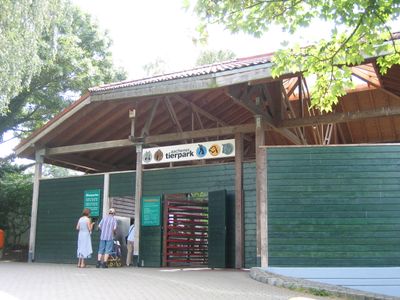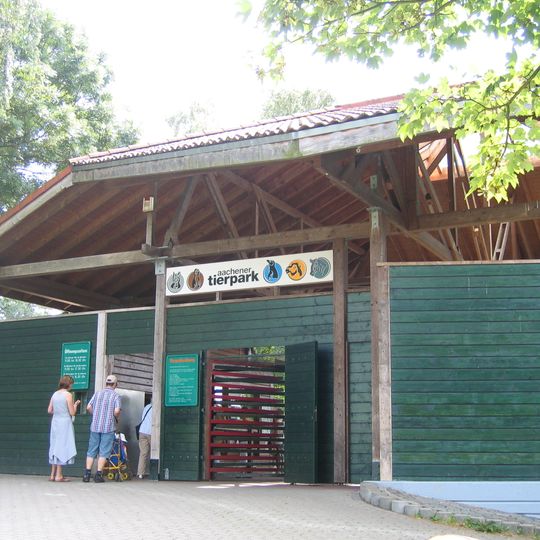
Aachener Tierpark Euregiozoo, Zoo in Aachen, Germany.
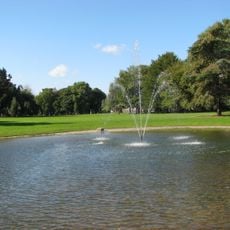
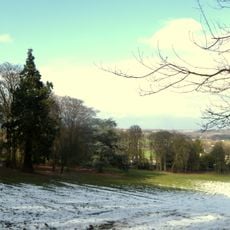
Aachener Tierpark Euregiozoo is a zoo of 8.9 hectares in the Drimborner Wäldchen between the Forst and Beverau districts of Aachen. The Beverbach stream runs through it and is dammed into a pond of about 2 hectares. It keeps roughly 520 animals from just over 70 species, including Asian camels, zebras, Watussi cattle, lynxes, servals, sloths and Waldrapp ibises.
A first zoo opened in Aachen in 1885 in the Lochnergarten, on the ground of today's Westpark, and closed in 1905 after feed and transport costs were underestimated. A new Tier- und Pflanzengarten opened on the same site in 1935; most animals died in a May 1944 air raid and the survivors were sold to Ulm. After 22 years without a zoo, the present park was laid out in the Drimborner Wäldchen in 1966, run by the Tierparkfreunde association until the Aachener Tierpark AG was founded in March 1970. The Roman sarcophagus on the grounds was found in 1793 at Haus Palant in Weisweiler.
The zoo's name refers to the Euregio Meuse-Rhine, the cross-border region of Germany, the Netherlands and Belgium. Its children's farm, opened in 1980, was the first educational project of its kind in Germany; schoolchildren care for the animals there under the guidance of two supervisors.
The zoo is open year-round with varying hours depending on the season, typically opening at 9:00 AM. Plan for at least several hours to see the different animal areas comfortably, as the grounds cover a reasonable amount of space.
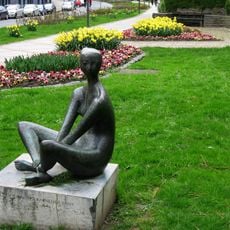
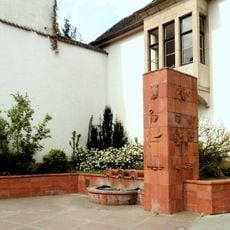
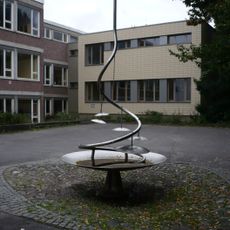
The zoo's roughly 3-kilometre walking route passes a Roman sarcophagus found in 1793 at Haus Palant in Weisweiler, now set among sculptures by regional and other artists. The park also keeps a Waldrapp, the only ibis originally native to Germany.
The community of curious travelers
AroundUs brings together thousands of curated places, local tips, and hidden gems, enriched daily by 94,077 contributors worldwide.