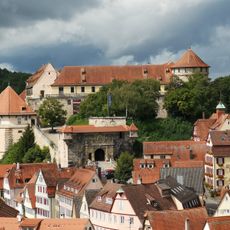
Schloss Hohentübingen, Renaissance castle and university museum in Tübingen, Germany
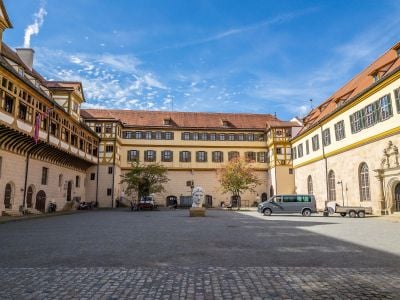
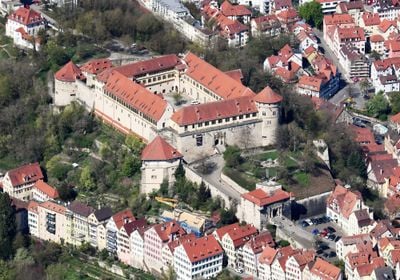
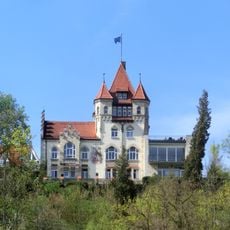
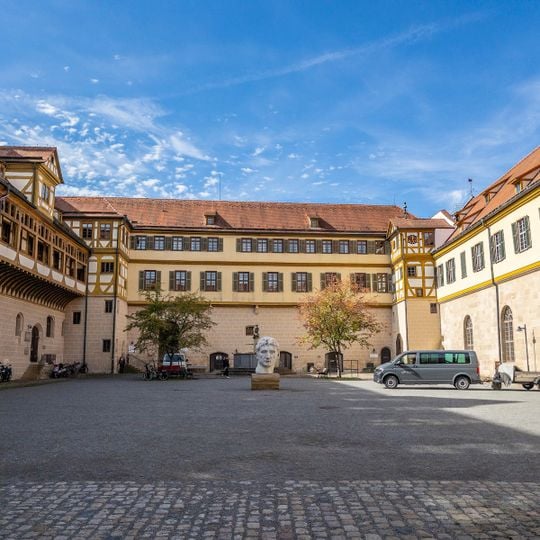
Schloss Hohentübingen is a four-wing castle structure with a round tower situated on a hill above Tübingen. The buildings feature stone and timber construction, with large courtyards and staircases that connect different levels throughout the complex.
A castle stood here by 1078, when King Henry IV besieged it during the Investiture Controversy. The indebted Counts of Tübingen sold town and castle to Württemberg in 1342. Duke Ulrich had the medieval fortress rebuilt from 1507 and again from 1534 to 1550 as a four-winged Renaissance castle, using stone from the demolished Bebenhausen monastery church.
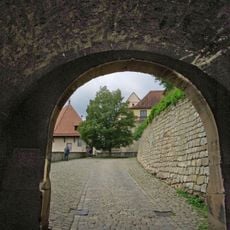
The castle church in the south wing was consecrated in 1178, before the later St. Georg collegiate church, making it the oldest church site in Tübingen. Pope Sixtus IV raised the chapel to a parish church in 1481, but it was demoted to a filial church in 1516. The castle gate with its carved portal dates from 1607 and is the work of Christoph Jelin.
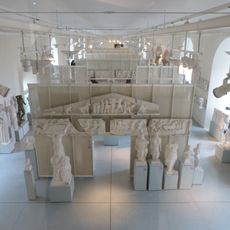
Parts of the castle are accessible to visitors, while others are used by the university for teaching and research. When exploring, keep in mind that not all areas are open, and it is wise to check current visiting hours beforehand.
The north-east tower served as the cartographic zero point of the Kingdom of Württemberg: from 1817 Johann Gottlieb von Bohnenberger measured all geographical distances in the kingdom from it. The castle also holds a mammoth-ivory horse figurine of the Aurignacian culture, about 40,000 years old, found in the Vogelherd cave.
The community of curious travelers
AroundUs brings together thousands of curated places, local tips, and hidden gems, enriched daily by 93,779 contributors worldwide.