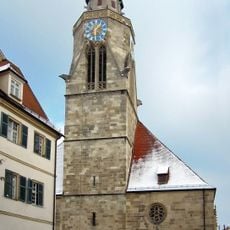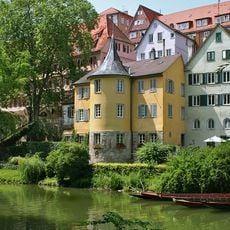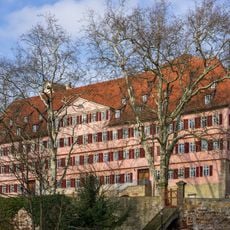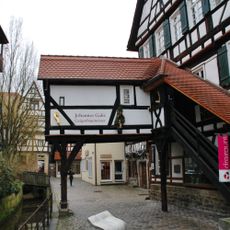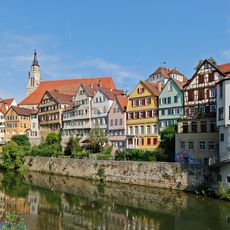
Eberhardsbrücke Tübingen, Road bridge in Tübingen, Germany.
Eberhardsbrücke crosses the Neckar River using two arches and stretches about 81 meters, with notably wide sidewalks designed for pedestrian movement. The structure links different neighborhoods and serves as a key point in the city's transportation network.
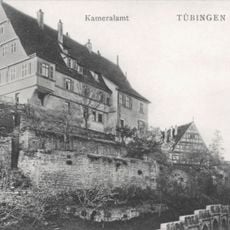
The original structure at this location was a stone bridge with five arches, built between 1482 and 1489 and used for roughly 400 years. The old bridge was demolished in 1899 and replaced with the current version.
The bridge takes its name from Count Eberhard im Bart, founder of Tübingen University, reflecting how local infrastructure honors the city's academic roots. This naming reminds visitors of how deeply the university shaped the community.
The crossing is used by several bus lines and features marked sections for buses and bicycles, making it clear how different travelers move across. Pedestrians can easily use the wide sidewalks to cross the river safely.
During World War II, the bridge narrowly escaped planned destruction when a local innkeeper created a diversion that prevented the Wehrmacht from demolishing it. This unusual survival story is little remembered today, yet it shows how ordinary people affected the fate of cities.
The community of curious travelers
AroundUs brings together thousands of curated places, local tips, and hidden gems, enriched daily by 91,362 contributors worldwide.