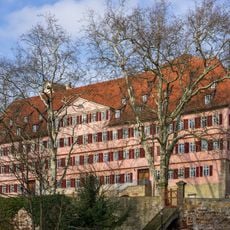
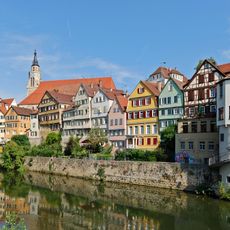
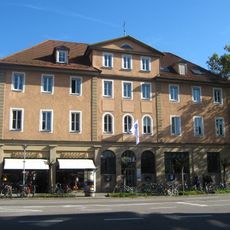
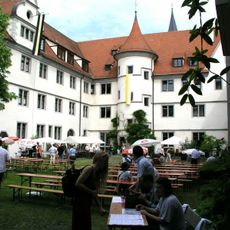
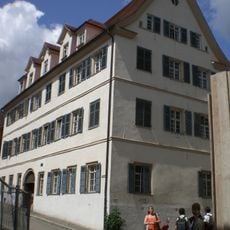
Bebenhäuser Pfleghof, Medieval administrative court in Tübingen, Germany
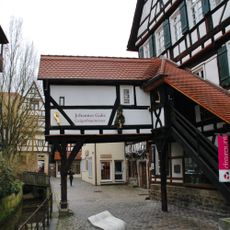
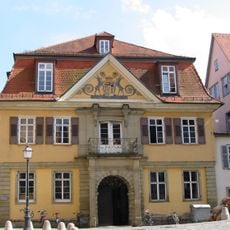
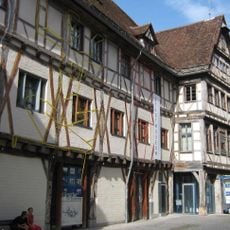
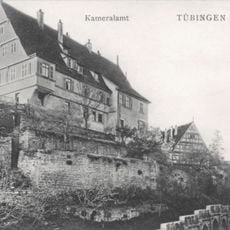
Bebenhäuser Pfleghof is a medieval administrative building in Tübingen featuring a three-wing structure with a southwest-facing facade. Inside it contains a chapel with late Gothic vaulted ceilings and ornate tracery windows.
The Bebenhäuser Pfleghof was built in 1342 as one of four economic estates the Cistercian monastery of Bebenhausen held in Tübingen, probably since 1320. Abbot Bernhard von Magstadt began the new building in 1492, completed between 1492 and 1501 over remains of the 11th to 14th centuries. When Duke Ulrich introduced the Reformation in 1534, the monastery was dissolved and the Pfleghof lost its religious role.
The chapel inside displays carved keystones showing symbols of the four evangelists and holds a notable statue of the Virgin Mary with child. This decoration shows that the building served both practical and spiritual needs for the people who lived and worked there.
The building now houses the Institute of Musicology, the University Museum, student residences, a daycare center, and a police station in Tübingen's city center. Visitors should note that not all areas are publicly accessible and some rooms may only be viewed at certain times.
The chapel was consecrated on 20 October 1492 by the auxiliary bishop and vicar general of Konstanz, not by the bishop himself. At the consecration he granted every future visitor a 40-day indulgence, which suggests the chapel was more than a simple house chapel for the monks.
The community of curious travelers
AroundUs brings together thousands of curated places, local tips, and hidden gems, enriched daily by 94,189 contributors worldwide.