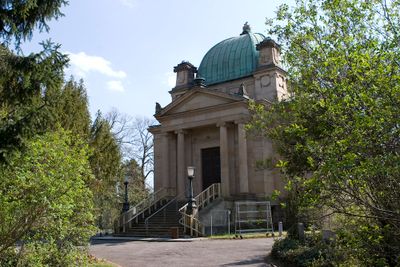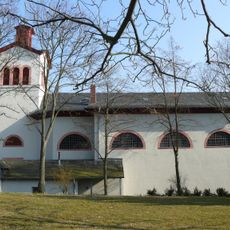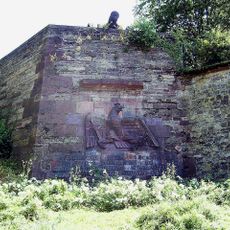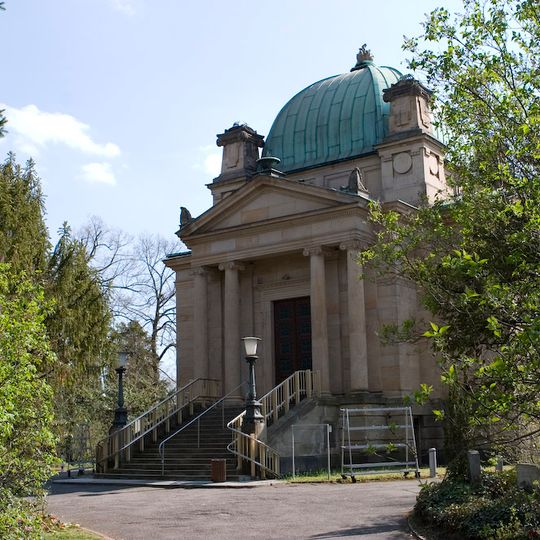
Hauptfriedhof Mainz, Cultural heritage cemetery in Mainz, Germany.
Hauptfriedhof Mainz is a large cemetery in the city with organized sections connected by clearly marked pathways. The grounds hold thousands of graves and memorial stones arranged throughout the property.
The cemetery was established in 1803 following French administration of Mainz and replaced earlier burial sites in the city. The land itself had served burial purposes since ancient times.
Mainz residents call a visit to the cemetery "going to Aureus", after the bishop said to have been martyred on this ground; his bones were later moved to St. Alban. The two Gruftenstraßen hold the grave monuments of prominent Mainz families, and the oldest surviving gravestone dates from 1805.
The cemetery is easily accessible by public transport with a tram stop nearby for direct access. Plan to spend time walking through the grounds, and comfortable shoes are recommended for exploring the pathways.
The cemetery served as the model for the Cimetière du Père-Lachaise in Paris, laid out a year later in 1804. Its two Gruftenstraßen include the Portalgruften, or "Backofengruften", underground vault chambers reached by stairs, built 1850–1879 and found on no other cemetery in Germany.
The community of curious travelers
AroundUs brings together thousands of curated places, local tips, and hidden gems, enriched daily by 92,794 contributors worldwide.