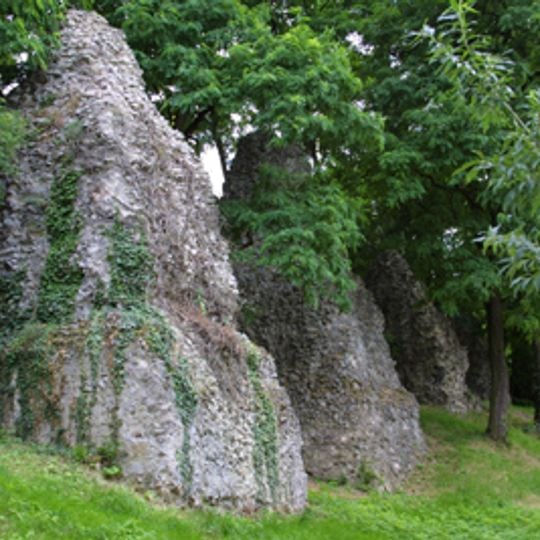
Restant aquaduct van Mogontiacum, Roman aqueduct remains in Zahlbach, Mainz, Germany
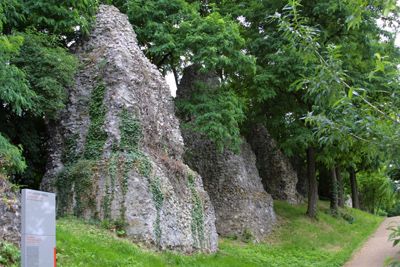
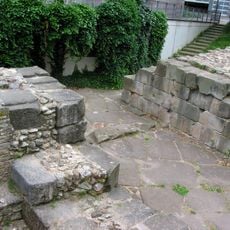
The Römersteine are the visible remains of the Roman aqueduct of Mogontiacum, in the Zahlbach valley in Mainz. Sixty-nine piers of Roman cement survive, a few still carrying fragments of their outer casing; the structure crossed the valley on two tiers of arches and reached about 25 m, the highest aqueduct north of the Alps. Parts of the catchment basin can be seen on the university hospital grounds.
The aqueduct was built shortly after 70 CE by Roman legionaries to supply water to the military settlement of Mogontiacum. This project reflects Rome's investment in infrastructure for its military bases.
The remaining structures show how Romans managed water supply for their settlement. You can still see traces of these water channels at different locations throughout the city.
The visible remains lie in the Zahlbachtal in Zahlbach, part of Bretzenheim, not in the old town: 69 piers of Roman concrete stand in the valley, a few still with casing in place. Further pier fragments are near the USC sports ground of Johannes Gutenberg University and on the Koblenzer Straße between Bretzenheim and Finthen/Drais. Parts of the catchment basin can be seen on the university hospital grounds.
Water for the aqueduct came from springs in Finthen, an area far outside the city, highlighting the scale of this ancient water solution. Romans had to transport water across great distances to their base to meet daily needs.
The community of curious travelers
AroundUs brings together thousands of curated places, local tips, and hidden gems, enriched daily by 94,383 contributors worldwide.