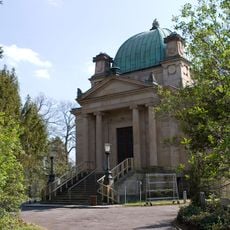
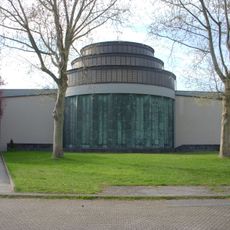
Botanischer Garten der Johannes Gutenberg-Universität Mainz, University botanical garden in Mainz, Germany.
The Botanical Garden at Johannes Gutenberg University is a scientific collection on campus housing over 8,500 plant species in outdoor beds and greenhouses. The grounds are organized into different sections, including areas for medicinal plants, alpine flora, and tropical specimens.
The garden was founded after World War II between 1946 and 1955 on the site of a former military base and farmland. The first greenhouse was built in 1948, marking the beginning of the modern collection.
Since the 1950s the garden's paths have been named after botanists, most chosen by founder Wilhelm Troll; the main path honours Carl von Linné, and Goethe, regarded as the founder of plant morphology, has a path from the start. On 6 May 2024 several paths were renamed after women, among them Barbara McClintock, honoured for her Nobel Prize-winning discovery of transposons in maize.
The garden lies on the university campus at Franz von Bentzel-Weg 9 and is open daily. Guided tours, both regular and individual, run throughout the year, and the "Grüne Schule" offers programmes for school classes. The grounds cover about 10 hectares, so allow time to walk between the arboretum, systematic garden and greenhouses.
In 1997 a large agave was planted in the succulent house; it was thought to be Agave horrida, but when it flowered in 2014 its inflorescence identified it as the Mexican Agave salmiana. Growing three to six centimetres a day, the flower spike broke through the greenhouse roof in late April 2014, and the first buds opened on 23 June 2014. It was the garden's first flowering of a large agave species since its founding, after which the plant died.
The community of curious travelers
AroundUs brings together thousands of curated places, local tips, and hidden gems, enriched daily by 94,489 contributors worldwide.