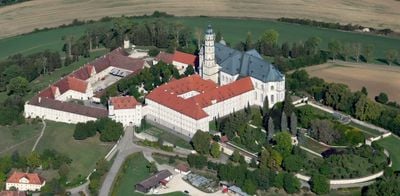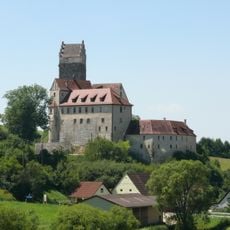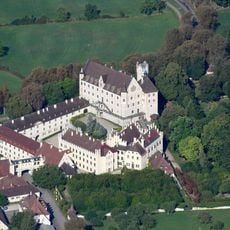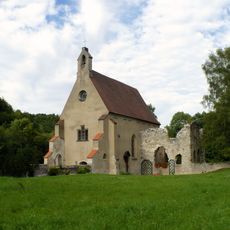
Neresheim Abbey, Benedictine abbey in Neresheim, Germany
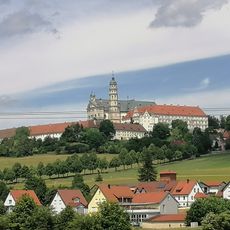
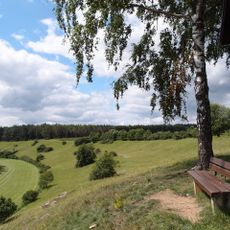
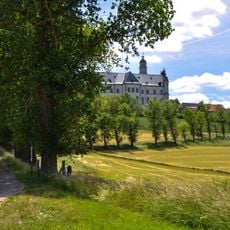
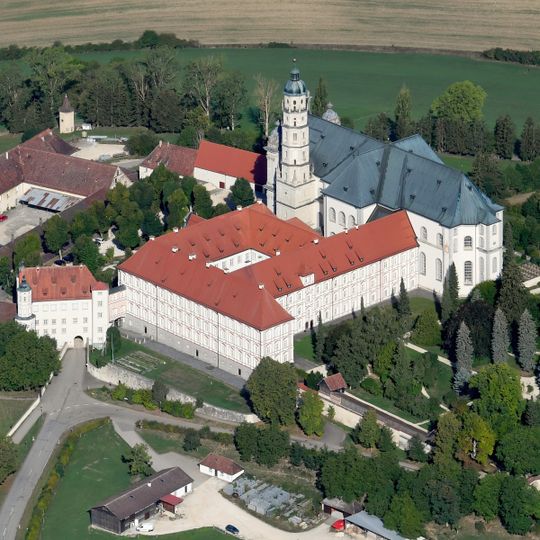
Neresheim Abbey is a Benedictine monastery positioned on a hillside above the small town of the same name in eastern Baden-Württemberg. The baroque church rises with seven domes arranged along a central axis, and the interior follows a plan by Balthasar Neumann that combines open space with natural light.
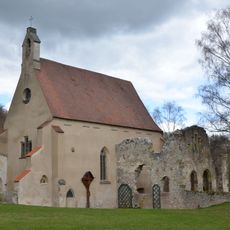
The site was established in 1095 as a house for Augustinian Canons and switched to the Benedictine order in 1106 under the patronage of Count Hartmann I of Dillingen. The current baroque church was built between 1745 and 1792, replacing an earlier medieval structure.
The monastery's daily routine still follows the Benedictine principle of prayer and work, with monks gathering several times a day for communal worship. Visitors attending Mass can hear the community chant in Latin, maintaining a tradition that has shaped monastic life here for centuries.
The complex is open year-round and offers guided tours of the church, along with a bookshop, restaurant, and guest rooms for those staying overnight. Visitors planning to enter the church should check service times to avoid disrupting the monks during worship.
The church contains a large baroque organ built by Johann Nepomuk Holzhey between 1792 and 1797, featuring 3,861 pipes and 45 stops that make it one of the most important instruments of its era. During concerts and services, the organ fills the space beneath the seven domes with sound that reflects off the painted surfaces.
The community of curious travelers
AroundUs brings together thousands of curated places, local tips, and hidden gems, enriched daily by 90,794 contributors worldwide.