Felix Nussbaum Haus, Art museum in Osnabrück, Germany
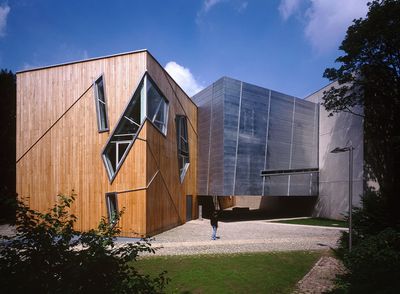
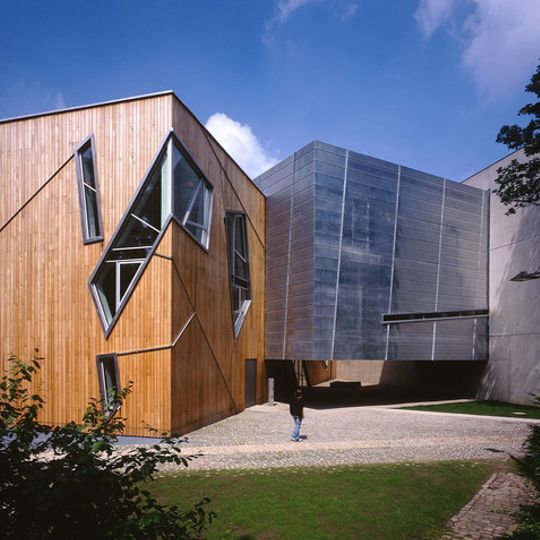
The Felix Nussbaum Haus is an art museum in Osnabrück that displays approximately 160 paintings by a Jewish artist, including works from before the war, during his exile, and recently discovered pieces. The building comprises three connected sections, each representing different periods of his creative life.
In 1994 Daniel Libeskind won a competition against 295 other architects to design the museum; his proposal, titled "Museum Without Exit," was built and opened on 16 July 1998, Libeskind's first completed building. It was inaugurated by Gerhard Schröder, then prime minister of Lower Saxony. The city had decided in 1991 to dedicate a museum to Felix Nussbaum, a native son murdered at Auschwitz in 1944, after his works were returned to Osnabrück in 1969 and shown from 1971.
The museum bears the artist's name and honors his memory through its layout and displayed works. Walking through, you notice how the building itself tells a story about displacement and survival.
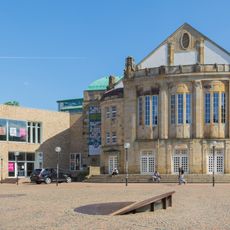
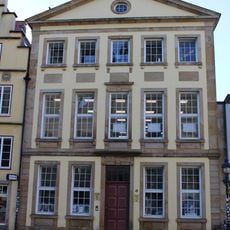
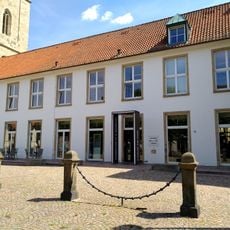
The museum sits in the Museumsquartier at the corner of Lotter Straße and Heger-Tor-Wall, directly bordering Osnabrück's old town. The entrance building is two storeys high. Inside, the layout is deliberately labyrinthine, with many paths ending in dead ends, so allow time to find your way between the oak, concrete and metal volumes.
The museum's four outer walls each point toward a city in Nussbaum's life: Berlin, Rome and Hamburg, where he studied, and the camp where he was killed. The interior is a labyrinth whose paths often end in dead ends. Libeskind's first completed building, it opened in July 1998.
The community of curious travelers
AroundUs brings together thousands of curated places, local tips, and hidden gems, enriched daily by 92,946 contributors worldwide.