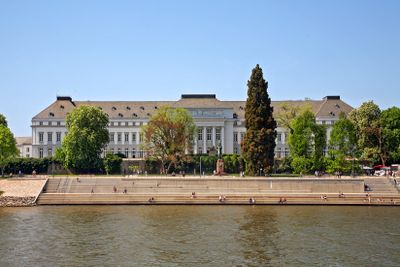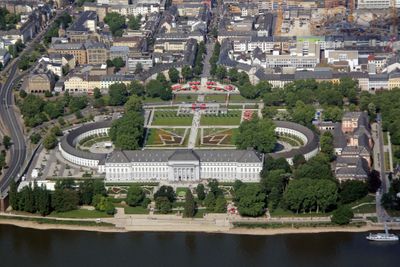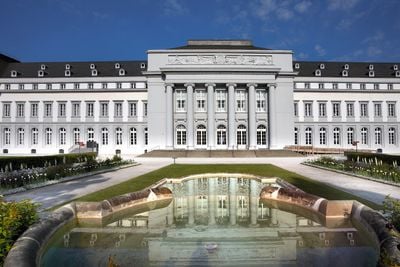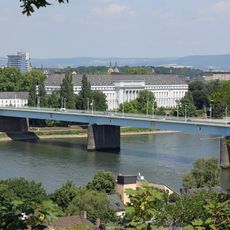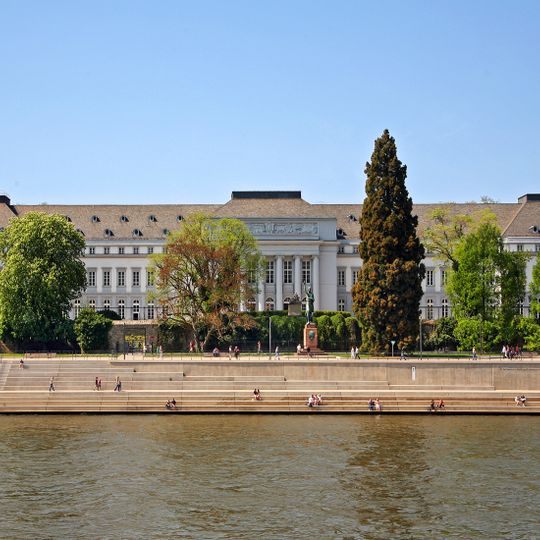
Electoral Palace Koblenz, Neoclassical palace at Rhine River, Koblenz, Germany.
The Electoral Palace in Koblenz is a Neoclassical building sitting beside the Rhine with a broad main block flanked by two curved wings. Eight thick columns frame the central entrance, creating a formal and imposing front.
Construction took place from 1777 to 1793 under the direction of French architects for the last Archbishop-Elector of Trier. Its completion came just before the region faced dramatic changes following the French Revolution.
The palace served as the residence of the Archbishop-Elector of Trier, embodying his power and influence over the region. Its grandeur reflected the importance of religious authority in 18th-century German territories.
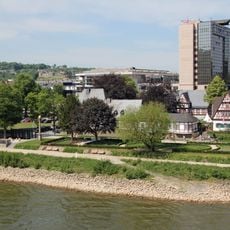
The building sits in downtown Koblenz and is now a government office, so you cannot go inside on regular days. The best way to see it is by walking along the nearby riverbank paths where you get a clear view of the front and sides.
Beneath the palace grounds lie remains of a Roman craftsmen's workshop settlement discovered through excavation work. This archaeological find shows that the riverbank here was already a busy place thousands of years before the building was constructed.
The community of curious travelers
AroundUs brings together thousands of curated places, local tips, and hidden gems, enriched daily by 91,357 contributors worldwide.