Jewish Cemetery, Koblenz, Jewish cemetery in Koblenz, Germany.
The Jewish Cemetery in Koblenz is a burial ground with approximately 400 gravestones arranged in rows, documenting the burial practices of the local community. The stones mostly date to the 19th century and vary in size and design.
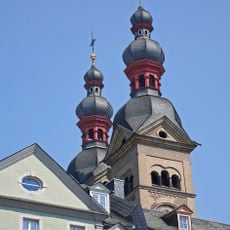
The Jewish community bought a vineyard from Sifrid and Mechtild von Montabur in 1303 to lay out the cemetery in today's Rauental district. After the 1418 expulsion from Kurtrier the gravestones were reused as building material, among others in the choir of the Liebfrauenkirche. In the November pogrom of 1938 the cemetery was devastated; stones were built into a staircase in Koblenz-Lützel and brought back after 1945, further stones followed in 2010.
The cemetery adjoins the synagogue that the few survivors built in 1947 inside the former funeral hall designed by Carl Schorn in 1925. A memorial stone placed at the synagogue's rear wall in 1995 replaced the 1920 memorial to 23 Jewish soldiers of the First World War, destroyed by the Nazis in 1938. The avenue of 64 horse chestnut trees was declared a natural monument in 1937.
The cemetery lies in the Rauental district, directly south of the synagogue that served as its prayer hall until 1947. A 1937-protected avenue of 64 horse chestnut trees lines the grounds. The west half was raised almost 2 m in 1922, so newer graves lie above the older ones. Visitors should dress and behave as in any Jewish burial ground.
In 1922, when the cemetery was full, the western half of the plot was raised almost 2 m with earth so that new graves lay above the old ones without disturbing earlier burials. The avenue of 64 horse chestnut trees was declared a natural monument in 1937.
The community of curious travelers
AroundUs brings together thousands of curated places, local tips, and hidden gems, enriched daily by 94,256 contributors worldwide.