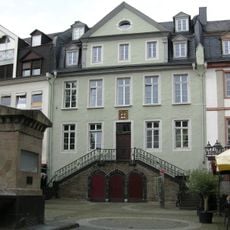
Alte Münze, Cultural heritage building in Koblenz, Germany
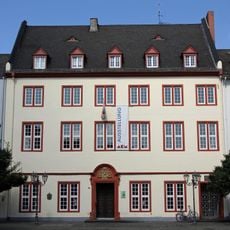
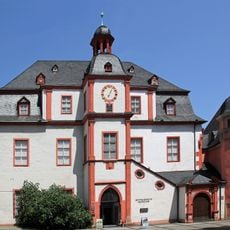
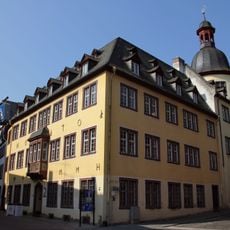
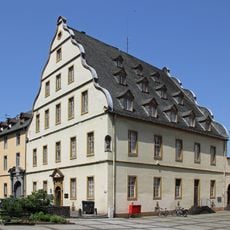
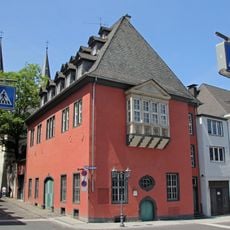
The Alte Münze is the former mint master's house of the electoral mint in Koblenz, a baroque building with a plain plastered facade of four to seven axes. Its southern narrow front carries a later-added dormer with a triangular gable, the northern side a continuous gable; the ground floor has round-arched windows on the south, segmental-arched windows elsewhere. The mansard roof with two rows of dormers keeps its original roof truss, and inside survive the old wooden staircase, a stucco ceiling and two old stove niches upstairs.
The mint had operated in Koblenz since the 14th century, and in the 15th century the city replaced Trier as the main mint of the archbishops of Trier. In 1667 Elector Karl Kaspar von der Leyen bought plots near today's Münzplatz, and the surviving mint master's house was built there in 1761–63 for mint master Meydinger, probably to plans by court architect Johannes Seiz. Minting ceased in 1773; in 1806 the auxiliary buildings were auctioned for demolition to make way for a vegetable market, leaving only this house.
The building recalls Koblenz's role as a center for coin production and shows how important currency making was to the city's economy. Today, visitors can appreciate its exterior and understand the significance of this historical craft to local life.
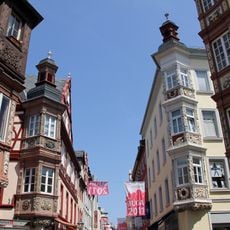
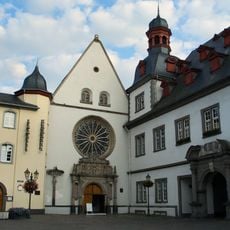
The building stands at Münzplatz near Alter Markt and is easily accessible on foot. When exploring the Old Town, it comes naturally on walking routes and offers a good view of baroque architecture.
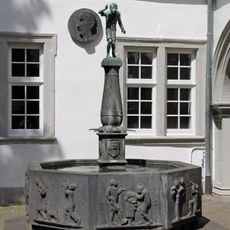
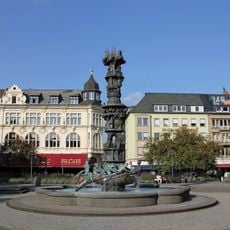
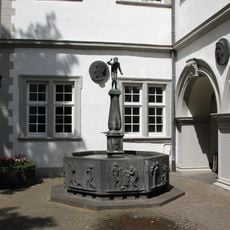
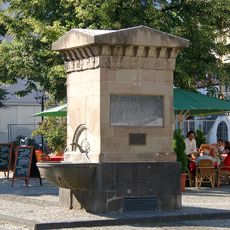
The fountain in front of the Alte Münze, created by sculptor Willi Heinzen, was donated to the city by Sparkasse Koblenz in 1992 for Koblenz's 2000th anniversary. The building itself has been part of the UNESCO World Heritage Upper Middle Rhine Valley since 2002.
The community of curious travelers
AroundUs brings together thousands of curated places, local tips, and hidden gems, enriched daily by 93,206 contributors worldwide.