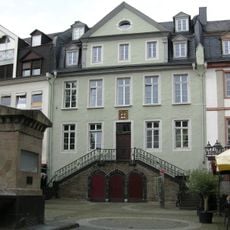
Bürresheimer Hof, Cultural heritage monument in Koblenz, Germany.
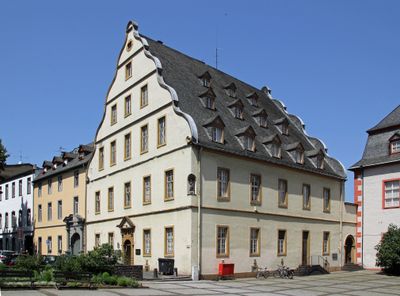
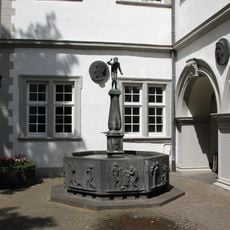
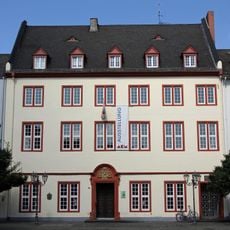
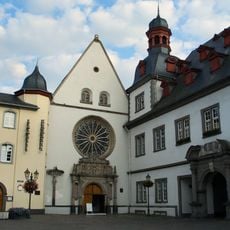
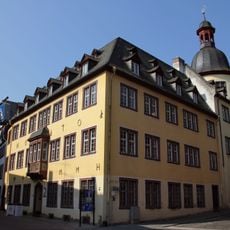
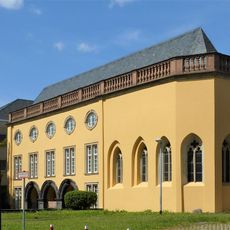
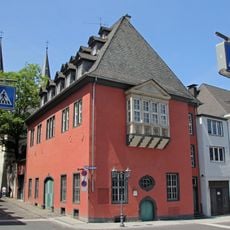
Bürresheimer Hof is a former noble residence on the west side of Florinsmarkt, built in 1659/60 to designs by Capuchin Father Bonitius of Linz. Its main house has a saddle roof between two curved gables; the portal of the courtyard entrance from 1659 was carved by Johann Georg Döll of Mayen. The complex once included two smaller buildings and a four-winged structure, and a gallery building was added toward the Moselle in 1771–74.
Construction took place from 1659 to 1660 based on designs by Capuchin Father Bonitius from Linz, with the building initially serving as a noble residence. In the 19th century it transformed into a synagogue until the Nazi era, marking a significant shift in its social function.
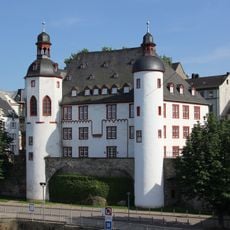
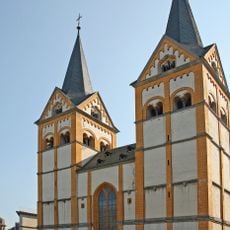
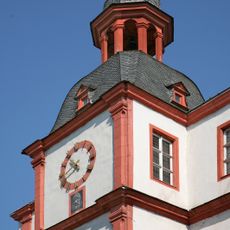
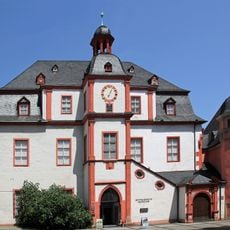
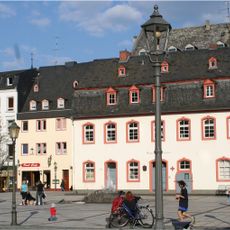
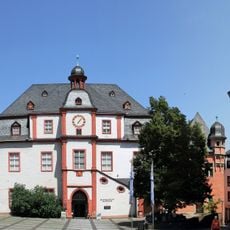
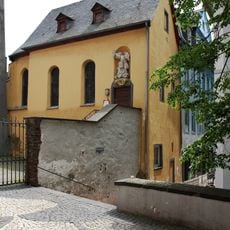
The Bürresheimer Hof forms a four-building ensemble at Florinsmarkt with the Altes Kaufhaus, the Schöffenhaus and the Florinskirche. Its name comes from the Freiherren zu Breitbach-Bürresheim, who inherited the property. A memorial plaque installed next to the main entrance on 14 November 1976 recalls the synagogue that occupied the main building from 1847/48 until 1938.
The building sits directly on Florinsmarkt in central Koblenz with easy pedestrian access from surrounding areas. The paved square and open layout around the site allow for comfortable viewing and walking around the exterior.
The 1938 pogrom wrecked the synagogue's interior but the building was not set alight, because fire could have spread to neighbouring houses. A memorial plaque was dedicated next to the main entrance on 14 November 1976. The exhibition panels from the former memorial room in the youth library went to the Koblenz city archive.
The community of curious travelers
AroundUs brings together thousands of curated places, local tips, and hidden gems, enriched daily by 93,714 contributors worldwide.