Schängel, Bronze sculpture in Koblenz, Germany.
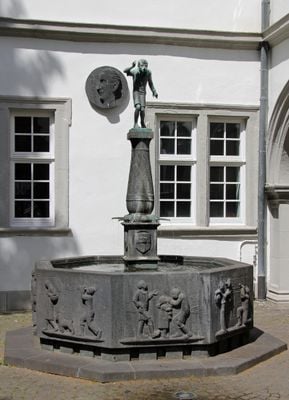
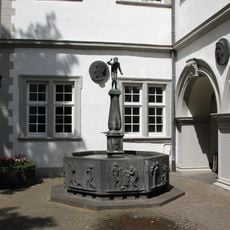
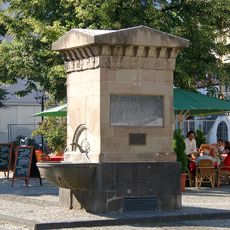
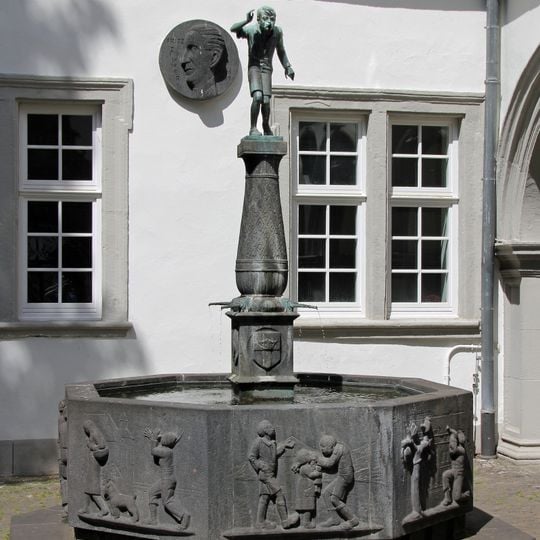
The Schängel is a bronze boy on an octagonal basalt fountain in the courtyard of Koblenz town hall. He holds one hand to his head and stretches the other arm out, while a thin jet of water arcs from his mouth. The tapered central column bears a shield emblem, and the basin panels show small figures and animals. A bronze medallion inscribed "FRITZ ZIMMER" is mounted on the wall behind.
The Schängelbrunnen was inaugurated on 15 June 1941 in the courtyard of Koblenz town hall. It goes back to an initiative by Koblenz citizens, among them the carnivalist Jupp Flohr, and was designed in 1939 by the Mayen sculptor Carl Burger. The fountain is dedicated to the dialect poet Josef Cornelius, creator of the Schängellied, and since 2002 it has formed part of the UNESCO World Heritage Upper Middle Rhine Valley.
The name Schängel comes from the French period (1794–1814), when Koblenz belonged to France. Locals could not pronounce Jean, the French form of the common German name Hans or Johann, and made it Schang, later Schängel. Once an insult meaning illegitimate child, it is now an honorary name for anyone born in Koblenz, often affectionately shortened to Schängelche.
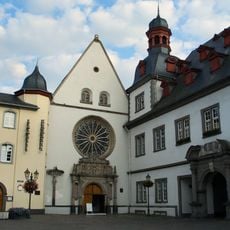
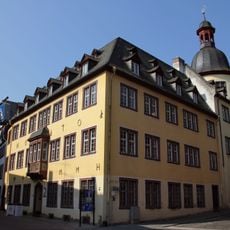
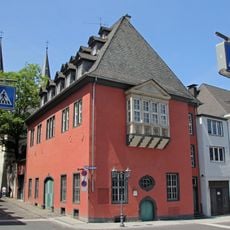
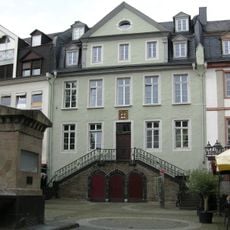
The fountain stands in the Rathaushof, the courtyard of Koblenz town hall on Willi-Hörter-Platz, framed by Renaissance and Baroque buildings. The bronze boy spits a jet of water several metres beyond the basin roughly every three minutes, so passers-by in the courtyard can get wet; keep a little distance if you want to stay dry.
The bronze boy was modelled on eleven-year-old Rudolf Dany from Mayen and cast in Munich. Every few minutes he spits a jet of water several metres out over the octagonal basalt basin, so passers-by in the town hall courtyard can get soaked.
The community of curious travelers
AroundUs brings together thousands of curated places, local tips, and hidden gems, enriched daily by 93,165 contributors worldwide.