Rathaus, Cultural heritage monument in Koblenz, Germany
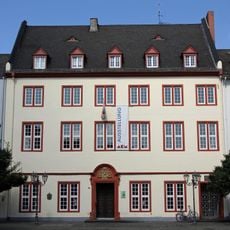
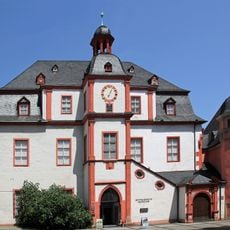
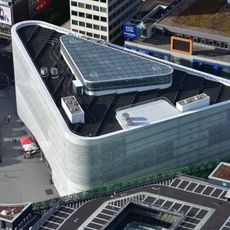
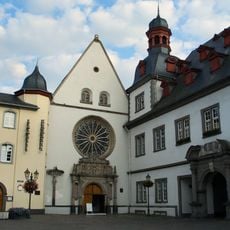
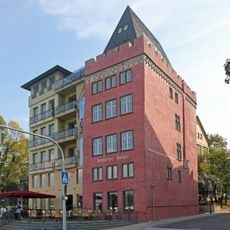
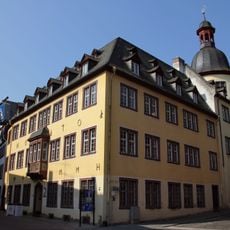
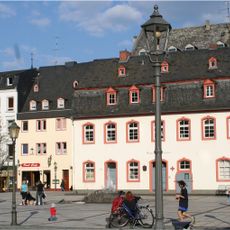
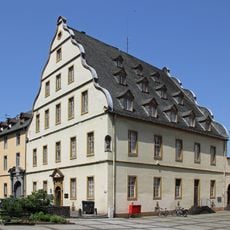
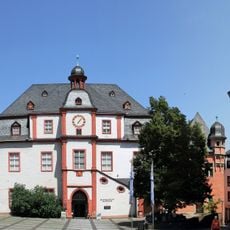
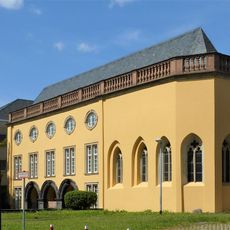
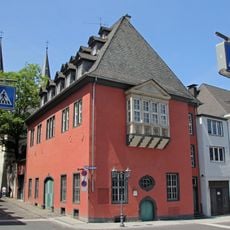
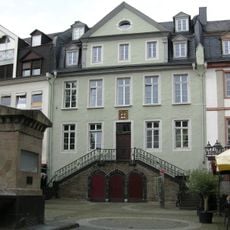
Rathaus in Koblenz is a complex of three connected buildings that blend late Renaissance, early Baroque, and contemporary architectural styles around four courtyards. The structure combines historic sections with modern additions designed to serve the city's administrative and civic needs.
Koblenz's first town hall is documented in 1182 near the Altenhof; the council later met in the Haus Monreal in the Braugasse, then from 1674 in the Altes Kaufhaus at the Florinsmarkt, and from 1805 at Am Plan 9. In 1891 the city bought the former Jesuit college for 300,000 marks and moved in after its 1894-95 conversion. The complex survived the WWII air raids largely intact, and on 4 June 1947 the first Rhineland-Palatinate state parliament met in its hall.
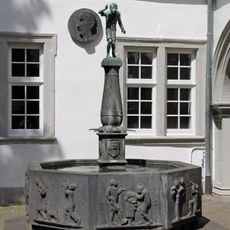
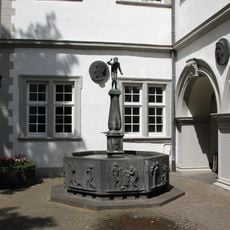
The Rathaussaal, the historic council hall, has hosted the Rhineland-Palatinate state parliament's first session on 4 June 1947 and served as a temporary stage for Koblenz's city theatre after the war. Since 1913 it has also been used for receptions, symposia, lectures and concerts. In the large courtyard, the Schängelbrunnen fountain has stood since 1941.
The complex is entered from Willi-Hörter-Platz in the old town; the four courtyards, including the one with the Schängelbrunnen, connect the wings and let you cross between them. The Rathaussaal on the first floor is used for council meetings, receptions and concerts, so it is not always open. Parts of the building serve as Rathaus II offices.
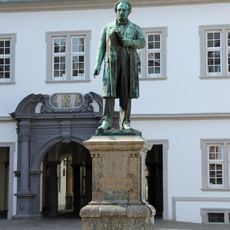
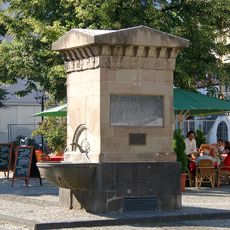
The Schängelbrunnen in the large courtyard dates from 1941. The figure it shows, the Schängel, recalls the years when Koblenz belonged to France: local boys were taught French at school and called out "Schang" (Jean) to passing French soldiers. The fountain is a meeting point in the courtyard.
The community of curious travelers
AroundUs brings together thousands of curated places, local tips, and hidden gems, enriched daily by 93,098 contributors worldwide.