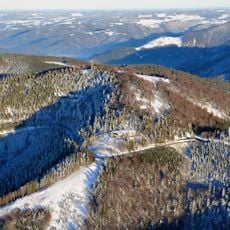
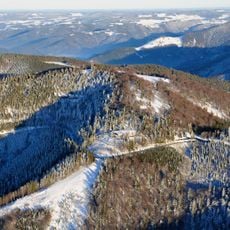
Schauinsland, Mountain summit in Baden-Württemberg, Germany.
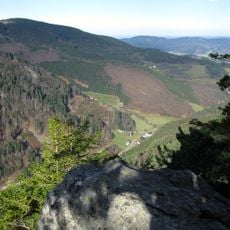
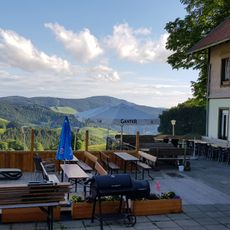
Schauinsland is a 1,284 m mountain in the Black Forest, about ten kilometres south-east of Freiburg's centre. Its summit lies within Freiburg's municipal boundary, with Oberried, Münstertal, Bollschweil and Horben around it and Hofsgrund the nearest village. The mountain was mined for silver, lead and zinc for over 700 years; the tunnels run about 100 km over 22 levels.
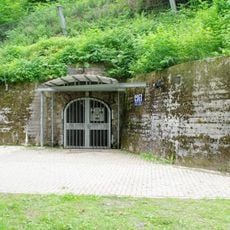
Silver, lead and zinc were mined at Schauinsland for over 700 years, with tunnels totalling about 100 km across 22 levels. In the 14th century, contractors of the Dieselmuot mine donated glass windows to Freiburg Minster. Mining ended in 1954; since 1975 the Barbarastollen has stored Germany's archived materials on film.
The name Schauinsland means "look into the country"; it was first recorded as "Schouwesland" in 1347, and earlier the mountain was called Erzkasten ("ore box") after its silver mining. Since 2007 the Schauinslandkönig hill climb has drawn over 1,000 participants a year up 11.5 km and 770 m of height gain, on racing bikes, tandems, unicycles, inline skates and roller skis.
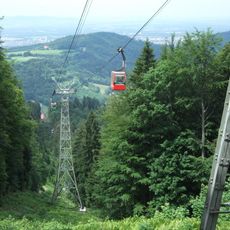
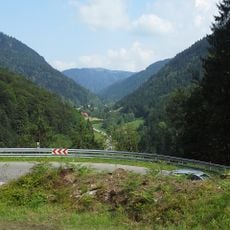
The Schauinslandstraße is closed to motorcyclists from 1 April to 1 November on weekends and public holidays. The road runs from Horben via the Holzschlägermatte up to the Schauinslandbahn mountain station. The summit lies in a nature reserve, so the wind turbine stands lower down at about 1,000 m.
The Barbarastollen, a converted section of the mine, has stored the Federal Republic's archives on film rolls since 1975 for the Federal Office of Civil Protection; it is Europe's largest long-term archive. The Kapplerstollen, called the midwife's tunnel, once let midwives and Kappel children shorten the way to Hofsgrund; its entrances are now closed.
The community of curious travelers
AroundUs brings together thousands of curated places, local tips, and hidden gems, enriched daily by 94,515 contributors worldwide.