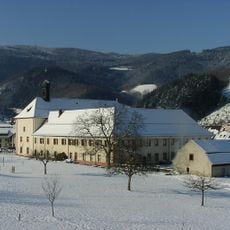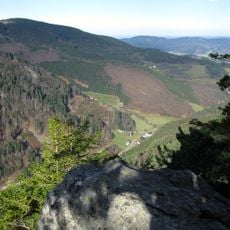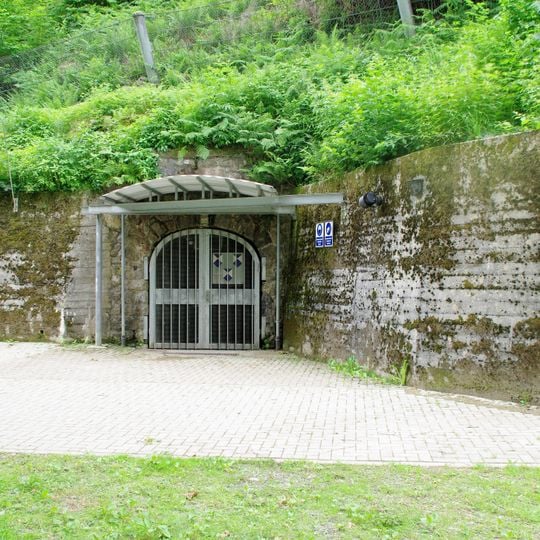
Barbarastollen underground archive, Underground archive in Oberried, Germany
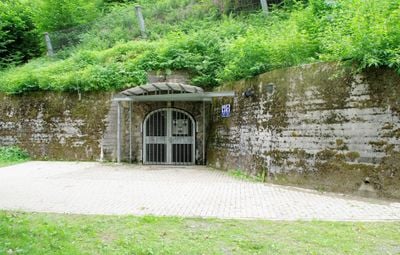
The Barbarastollen is a disused mining tunnel near Freiburg im Breisgau whose main gallery runs 680 meters into granite and gneiss. The microfilms are not kept in this gallery but in two 50-meter storage tunnels at 340 and 390 meters from the mouth, each 3 meters high and 3.40 meters wide, lined with shotcrete and closed by pressure doors. About 2,000 airtight stainless steel containers sit on double-decker shelves at a constant 10 °C and 75% humidity.
The facility began as a mine shaft in 1903 and was converted during the 1970s Cold War period into Germany's central document preservation center. This repurposing enabled secure storage of valuable archive materials protected by rock from external threats.
The archive is named after Saint Barbara, patron saint of miners, and stores microfilm facsimiles of documents such as the Peace of Westphalia, the papal bull threatening Martin Luther with excommunication, Otto I's coronation document and the original plans for Cologne Cathedral. The site is closed to visitors; its holdings are consulted through the German archives and museums that produced the films.
The archive is not open to visitors, as it operates under strict security protocols to protect the documents. Those interested can contact the institutions that store their collections there to learn more about the conservation methods used.
The archive is the only cultural property in Germany under special protection, and one of only five such sites worldwide, alongside Vatican City and three refuges in the Netherlands. The Hague Convention protection covers the tunnel itself, not just its contents.
The community of curious travelers
AroundUs brings together thousands of curated places, local tips, and hidden gems, enriched daily by 94,061 contributors worldwide.