Schwerbelastungskörper, Concrete test structure in Tempelhof-Schöneberg, Germany
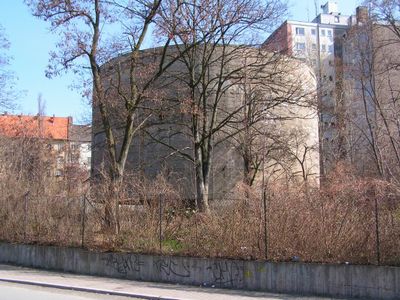
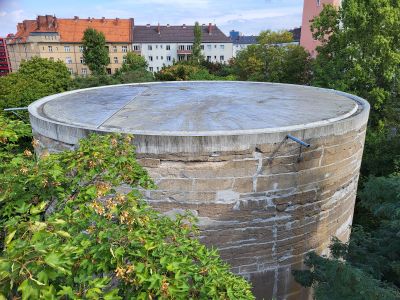
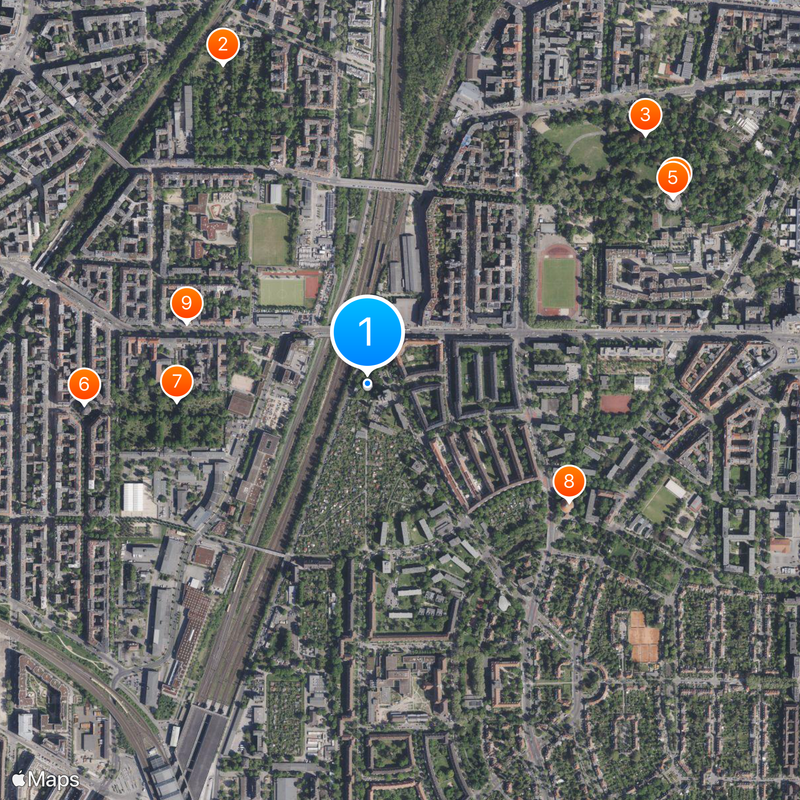
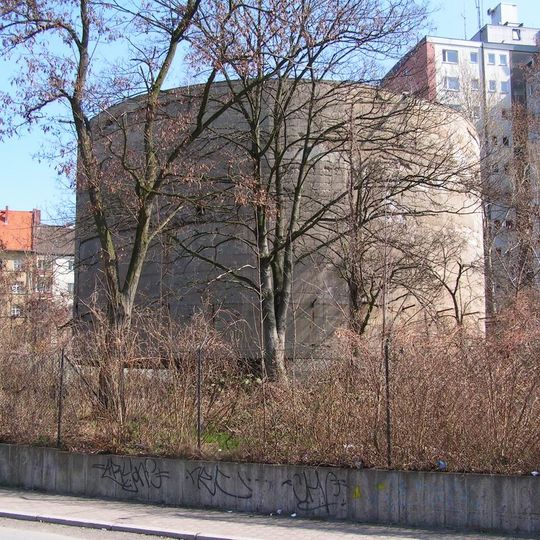
Schwerbelastungskörper is a grey reinforced concrete cylinder at the corner of General-Pape-Straße and Loewenhardtdamm in Tempelhof, Berlin. Its above-ground section is 14 m high and 21 m in diameter, resting on a foundation 11 m wide that reaches 18.2 m into the ground. The weathered surface is divided by faint vertical seams into broad panels, with small dark openings low on the curved facade.
Albert Speer commissioned the construction in 1941 to test the load-bearing capacity of Berlin's sandy soil for planned monumental buildings. The experiment showed that the ground was unsuitable for the intended dimensions of Germania architecture, as the settling exceeded tolerable limits.
Locals nicknamed the cylinder "Naziklotz" (Nazi block). Its interior served from mid-war as an improvised air-raid shelter for the surrounding population, and the typical steel air-protection flaps and doors still mark it today. Since 1995 the structure has been a protected monument.
The memorial site is located on General-Pape-Straße 100 and offers guided tours every Sunday at 3 PM. The grounds are open Tuesday through Sunday between 1 PM and 6 PM, with the exterior visible from the street at any time.
Workers from France who were forced into labor during the war built the massive cylinder. Despite its enormous weight, the structure settled only 19 centimeters after completion, which pointed to the limited stability of the ground.
The community of curious travelers
AroundUs brings together thousands of curated places, local tips, and hidden gems, enriched daily by 92,878 contributors worldwide.