Bauspar-Museum, Building society museum in Wüstenrot, Germany
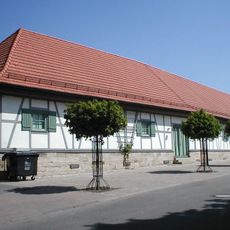
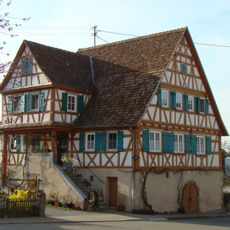
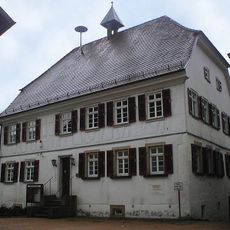
The Bauspar-Museum occupies the Georg-Kropp-Haus at Haller Straße 3, a half of an 18th-century farmhouse that Pauline Kropp bought in 1920 for 14,000 marks. Seven rooms on two floors display documents, desks, chairs and filing cabinets from Georg Kropp's life and work, plus exhibits on the spread of building savings. Room 1 holds the desk with a Continental typewriter Kropp kept after leaving the GdF in 1930.
Georg Kropp, a trained druggist, founded the Gemeinschaft der Freunde (GdF) in Wüstenrot in 1921 after publishing Aus Armut zum Wohlstand in 1920. In 1924 the GdF began building-society work in his living room; by 1926 its staff had grown from six to about 300. In 1930 the head office moved to Ludwigsburg against Kropp's will, so he resigned and founded the short-lived Neue Bausparkasse.
The museum displays typewriters and advertising materials that show how home ownership financing evolved in Germany. Visitors can see how these objects reflect the role that savings communities played in ordinary family life.
The museum occupies the upper and ground floors of the Georg-Kropp-Haus, with rooms 1 to 3 upstairs and rooms 4 to 7 below; the staircase holds the sales-training case. The building is the first stop on the building-savings history trail through Wüstenrot. The former farmhouse is not wheelchair accessible.
Visitors can see an intact sales suitcase from the early days that shows how representatives convinced their clients. Photographs also document specially modified vehicles that were used to promote building savings in rural areas.
The community of curious travelers
AroundUs brings together thousands of curated places, local tips, and hidden gems, enriched daily by 94,224 contributors worldwide.