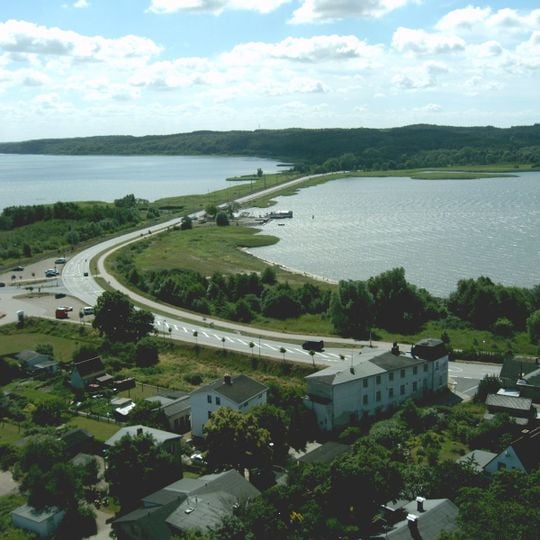
Großer Jasmunder Bodden, Lagoon in Mecklenburg-Vorpommern, Germany
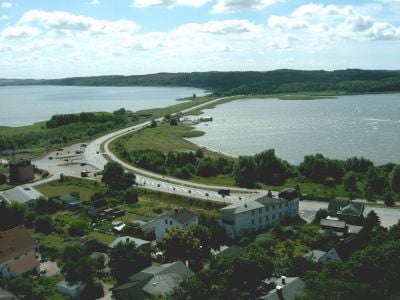
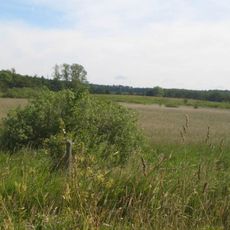
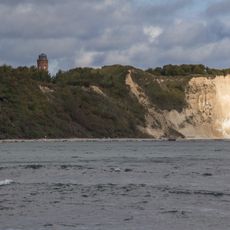
Großer Jasmunder Bodden is a lagoon on the Baltic coast of Germany, separated from the open sea by the island of Rügen and a narrow spit of land. It is a shallow body of water with a jagged shoreline, small bays, and reedy inlets, fed by several small streams.
The lagoon formed after the last ice age, when rising sea levels flooded the lowland behind the island of Rügen. In the 19th century, a causeway was built across the narrow spit to connect Rügen to the mainland, changing water flow in the lagoon.
The name Jasmund, shared with the nearby peninsula, comes from an old Slavic word for ash tree, a tree that still grows in the area. Local fishermen have long used the lagoon for catching pike and perch, and their small boats can often be seen near the shore.
The lagoon is best explored by boat or from the shore paths that run along parts of the coast. Access points are mainly in small villages, and some areas are marshy, so sturdy footwear is useful.
The lagoon is a stopping point for thousands of migratory birds each spring and autumn, including cranes and geese that rest on its shallow waters. Its water is less salty than the open Baltic, allowing freshwater species to thrive alongside marine ones.
The community of curious travelers
AroundUs brings together thousands of curated places, local tips, and hidden gems, enriched daily by 94,626 contributors worldwide.