Dobberworth, Bronze Age tumulus near Sagard, Germany
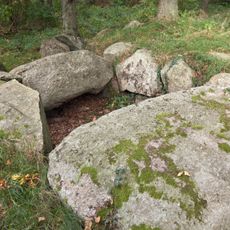
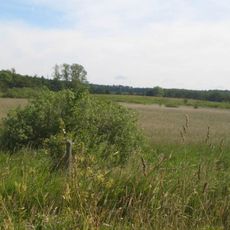
Dobberworth is a prehistoric tumulus at the southern edge of Sagard on the island of Rügen. It stands about 15 metres high, measures roughly 40 metres across and 150 metres in circumference, and contains an estimated 22,000 cubic metres of earth, making it the largest burial mound in Rügen and one of the largest in northern Germany.
The Dobberworth is a prehistoric tumulus whose construction date archaeologists have not been able to fix; it is assumed to have been used during the Bronze Age. It lies on the southern edge of Sagard on Rügen and is the island's largest burial mound, about 15 m high with a circumference of roughly 150 m and a diameter of about 40 m. Its builders heaped up an estimated 22,000 cubic metres of earth.
Local legends give three different origins for the mound: a giantess travelling to take revenge on a prince of Rügen who did not return her love, a male giant named Scharmak on his way to his girlfriend, and dwarves who live inside the hill guarding large amounts of gold.
The mound lies at the southern edge of Sagard on Rügen, reachable by public transport from nearby towns; signs on site explain the mound and its history. Sturdy shoes help, as the ground around the 15-metre-high, 40-metre-wide hill is uneven.
The name Dobberworth preserves an ancient Germanic language heritage, where 'worth' referred to an elevated estate or settlement location. This naming directly connects the physical mound to the linguistic past of the region.
The community of curious travelers
AroundUs brings together thousands of curated places, local tips, and hidden gems, enriched daily by 92,789 contributors worldwide.