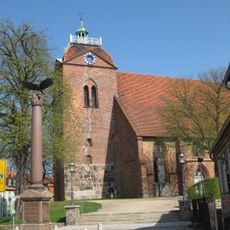
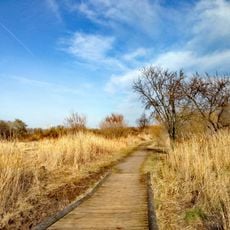
Dassower See, Saltwater bay in Lübeck, Germany.
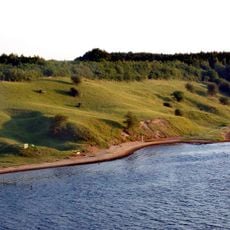
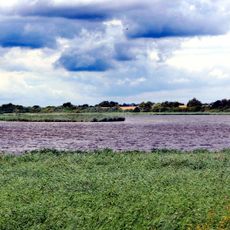
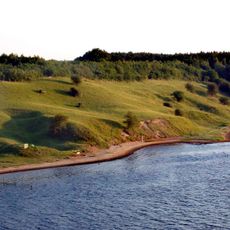
Dassower See is a brackish side bay (wiek) of the Trave Fjord, about 8 km² in area, cut off from the open Bay of Lübeck by the Priwall peninsula. It narrows from the mouth of the Stepenitz in the southeast, where a small landing stage serves Dassow's fishing boats, to roughly 300 m where it meets the Pötenitzer Wiek. Its two reed islands, Buchhorst (3.6 ha) and Graswerder (Plönswerder, about 1.1 ha), lie off the shores.
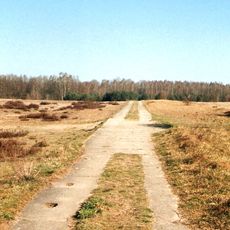
During German division, the lake was a border water with a concrete wall surrounding its perimeter, turning it into a restricted zone between East and West Germany. After reunification in 1990, this barrier was removed and the area became accessible to visitors again.
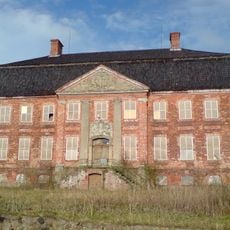
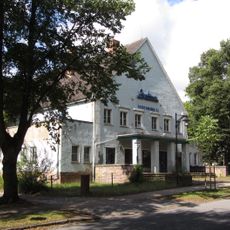
Schloss Lütgenhof on the shore was designed and built by Moritz von Paepcke in 1839. In 1999 Mast-Jägermeister AG converted it into a restaurant and hotel with twenty-three rooms. The name Dassow, given to the bay and the small town on its shore, comes from that town, the only larger settlement on the water.
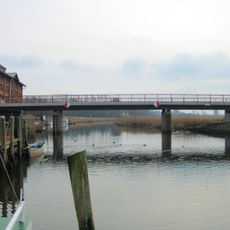
The bay lies northeast of Lübeck's built-up area, with its entire shoreline forming the border with Mecklenburg-Western Pomerania. The only larger settlement on the shore is Dassow, and at the mouth of the Stepenitz near the Dassow Bridge there is a small landing stage for fishing boats. The water surface is part of the federal waterway Trave, about 5.5 kilometres long to its southeastern end.
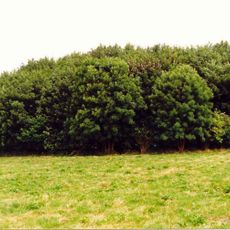
The two islands differ in size: Buchhorst lies about 250 metres off the western shore and covers 3.6 hectares, while Graswerder (also called Plönswerder) sits just west of the Stepenitz mouth and measures roughly 1.1 hectares. Both are reed-covered and closed to landing.
The community of curious travelers
AroundUs brings together thousands of curated places, local tips, and hidden gems, enriched daily by 94,457 contributors worldwide.