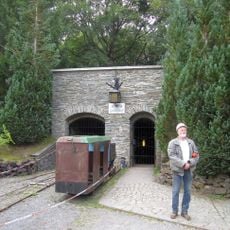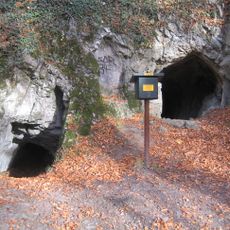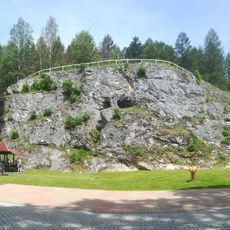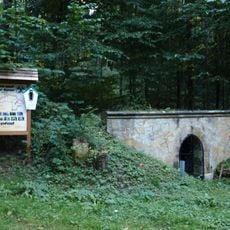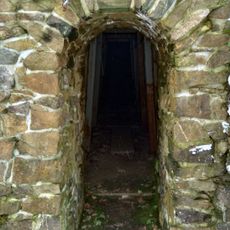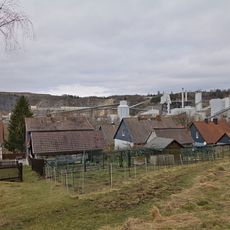
Hermann's Cave, Cave entrance in Rübeland, Germany
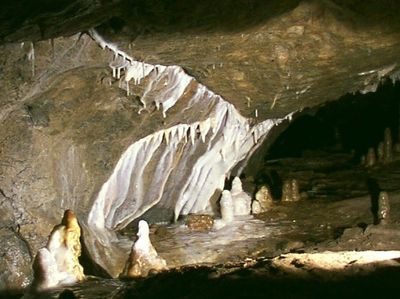
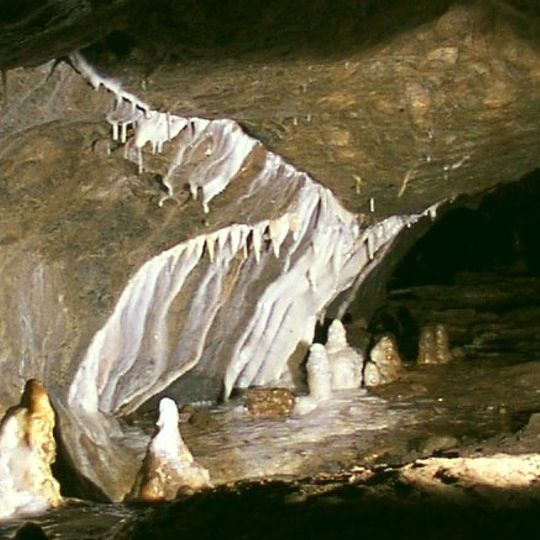
Hermann's Cave is a show cave in Devonian limestone of the Elbingerode complex, formed as the Bode Valley took shape near Rübeland. Its early sealing in 1866 preserved much of the dripstone decoration, and since 1970 surveys have mapped previously unknown chambers.
The cave was uncovered in 1866 when workers began road construction in the area and immediately attracted researchers. Excavations revealed substantial remains of animals from the Ice Age in the surrounding region.
The cave is known for its olms, cave salamanders relocated from the Adelsberg Grotto in Postojna, Slovenia. Five arrived in 1932 on the initiative of cave director Bernhard Lange and geologist Walter Biese, and 13 more were brought in 1956 by Wolfgang and Ingeburg Reichel. They live in the artificial Olmensee, about 80 cm deep and held at 7 °C.
Entry to the cave is by guided tour only, with routes leading through illuminated passages that accommodate most visitors. Wear sturdy footwear since the ground inside is uneven and can be slippery in places.
The Olmensee, an artificial pool about 80 cm deep kept at a constant 7 °C, holds Germany's only population of cave olms (Proteus anguinus). Five animals from the Adelsberg Grotto in Postojna, Slovenia, were placed here in 1932; 13 more arrived in 1956 and were released in January 1957. In 2015, five of nine animals were identified as pregnant females.
The community of curious travelers
AroundUs brings together thousands of curated places, local tips, and hidden gems, enriched daily by 92,953 contributors worldwide.