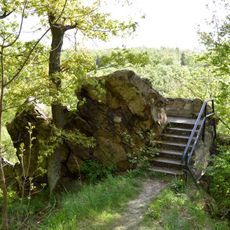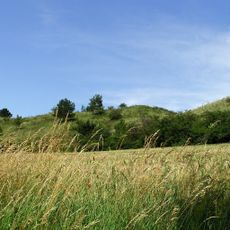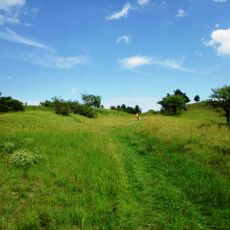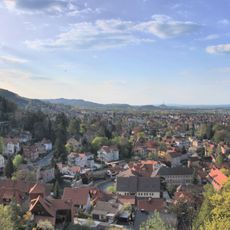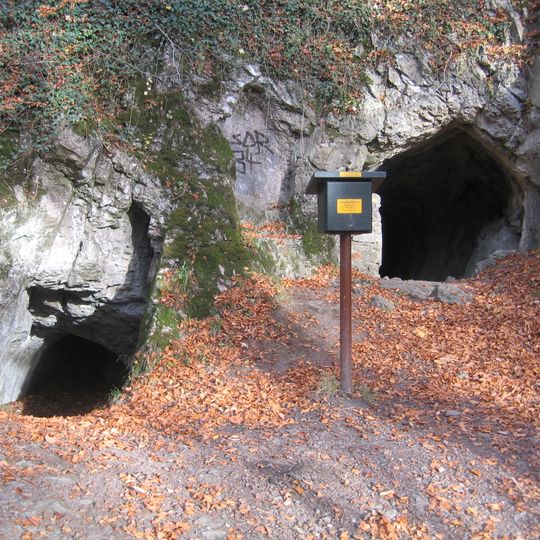
Volkmarskeller, Medieval monastery ruins and archaeological site in Blankenburg, Germany.
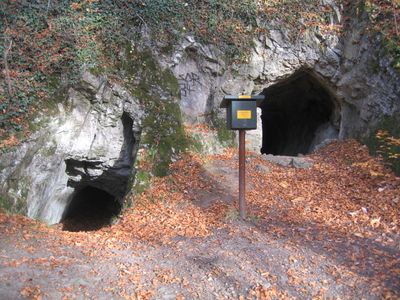
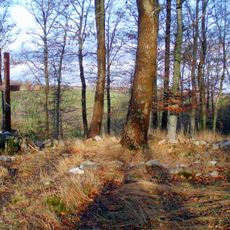
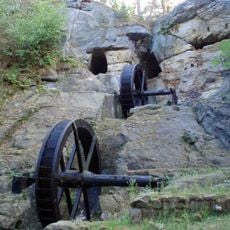
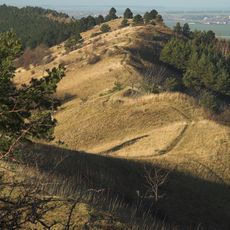
Volkmarskeller is a cave in the upper Klostergrund valley, about 5 km west of Blankenburg's old town, with the site of a former church of St. Michael beside it. The cave lies just below the hiking trail from Michaelstein Abbey to the Eggeröder Brunnen settlement. The ruined cave dwellings were excavated and made accessible in 1884–1887 by Baurat Brinkmann.
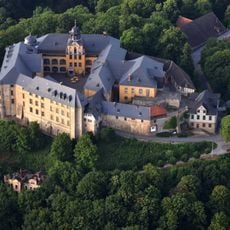
Around 850–870 the hermit Liutbirg, a confidante of bishops Haimo of Halberstadt and Ansgar of Bremen, was long believed to have lived here, until Walther Grosse showed her retreat was Wendhusen Abbey near Thale. The cave's St. Michael church was given to Quedlinburg Abbey by Otto I in 956. In 1146 Cistercian monks from Kamp under Abbot Roger settled the cave and church; by 1151–1167 the monastery moved to Evergodesrode, today's Michaelstein Abbey.
The name Volkmarskeller does not refer to a saint; it is linked to the nearby former iron ore pit, Grube Volkmar. The cave and its church were dedicated to St. Michael, and the site later housed Cistercian monks from Kamp Abbey under Abbot Roger from 1146. Today the cave is checkpoint no. 87 in the Harzer Wandernadel hiking network.
Access to the site is free and easily reached by hiking trails, with parking available at nearby Eggeröder Brunnen. The best time to visit is during warmer months when the paths are dry and the surroundings are easy to explore.
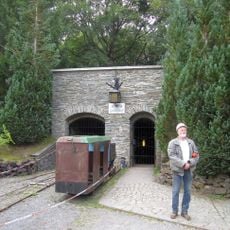
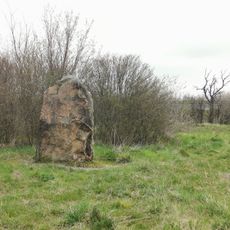
The nearby Grube Volkmar iron ore pit was abandoned after a 1893 dynamite explosion, caused by handling the explosive below 7 °C. In 2007 the Bergverein zu Hüttenrode placed a memorial to the killed miners on the path between Eggeröder Brunnen and Michaelstein Abbey.
The community of curious travelers
AroundUs brings together thousands of curated places, local tips, and hidden gems, enriched daily by 94,851 contributors worldwide.