Burgruine Birkenfeld, Castle ruin in Rübeland, Oberharz am Brocken, Germany
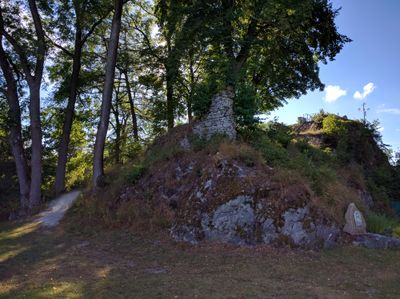
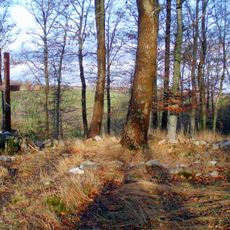
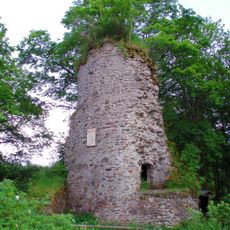
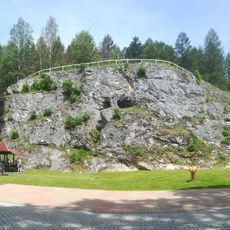
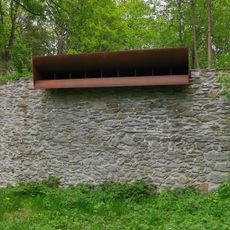
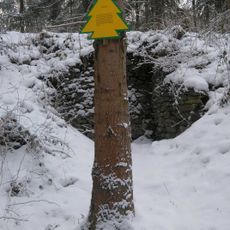
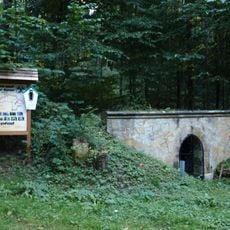
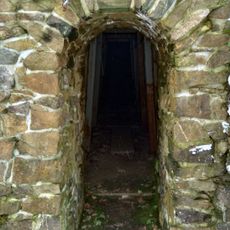
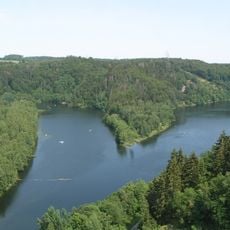
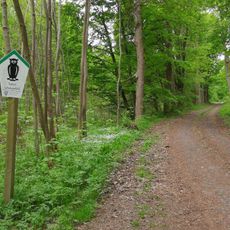
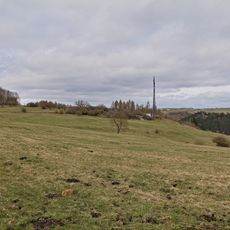
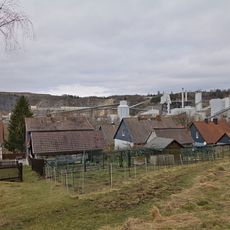
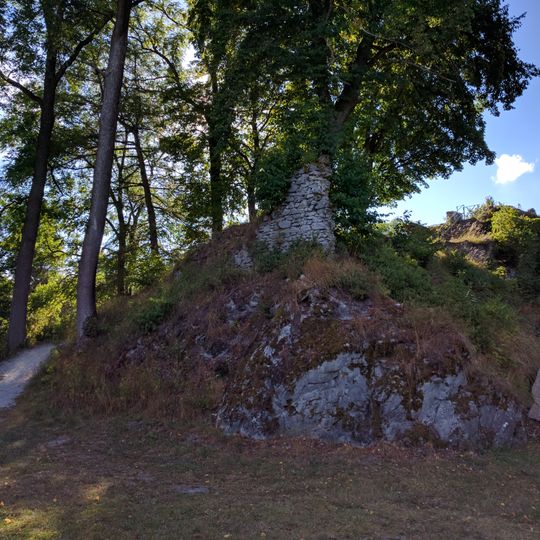
Burgruine Birkenfeld is a stone castle ruin perched on a rocky slope south of the Bode River with multiple sections visible. The site shows remaining walls of the upper fortress, lower fortress, and outer defensive walls that once encircled the area.
The castle was probably built in the 12th century to protect the ironworks of Rübeland, then called Birkenfeld, and as a border post of the Bodfeld forest. It is recorded as Bergvelt in 1260, as Berichsvelde in 1319, and as Bergkfelde in 1652. It was destroyed in the early 14th century, likely during the feud between Landgrave Frederick III and Duke Albert I of Brunswick-Grubenhagen, and appears as a ruin in Matthäus Merian's 1654 engraving.
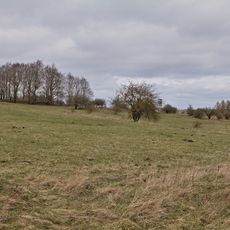
The name Birkenfeld derives from the castle's own name, recorded as Bergvelt in 1260, Berichsvelde in 1319 and Bergkfelde by 1652; the nearby village of Rübeland was formerly called Birkenfeld. A Halberstadt ministerial family named after the castle is documented between 1335 and 1443, and in 1361 Bishop Ludwig appointed the brothers Heisin and Dytherich van Barkinvelde as bailiffs of nearby Königsburg. Today the levelled lower and outer bailey serves as a shooting ground (Schützenplatz).
The ruins are open year-round with no entry fee, and paid parking is available at nearby locations such as Mulhental and Baumann's Cave. Visitors should wear sturdy footwear as the paths across the site involve rocky ground and uneven terrain.
The name Birkenfeld long outlived the castle: a noble family von Berckefeldt is recorded as early as 914, and a knight Werner von Berckefeldt appears in 1134, living at Pipinsburg near Osterode and serving as castellan of Burg Windhausen. The castle itself is documented as Bergvelt in 1260, Berichsvelde in 1319 and Bergkfelde in 1652, after its decay.
The community of curious travelers
AroundUs brings together thousands of curated places, local tips, and hidden gems, enriched daily by 92,955 contributors worldwide.